
Infrastructure Specification
Specify Highway Barriers, Friction Slabs and RE Facing Panels
Define the highway component, approved geometry and connection details so related mould systems are quoted against the correct scope.
By Paras Steel Industries ·
Separate the barrier and retaining systems
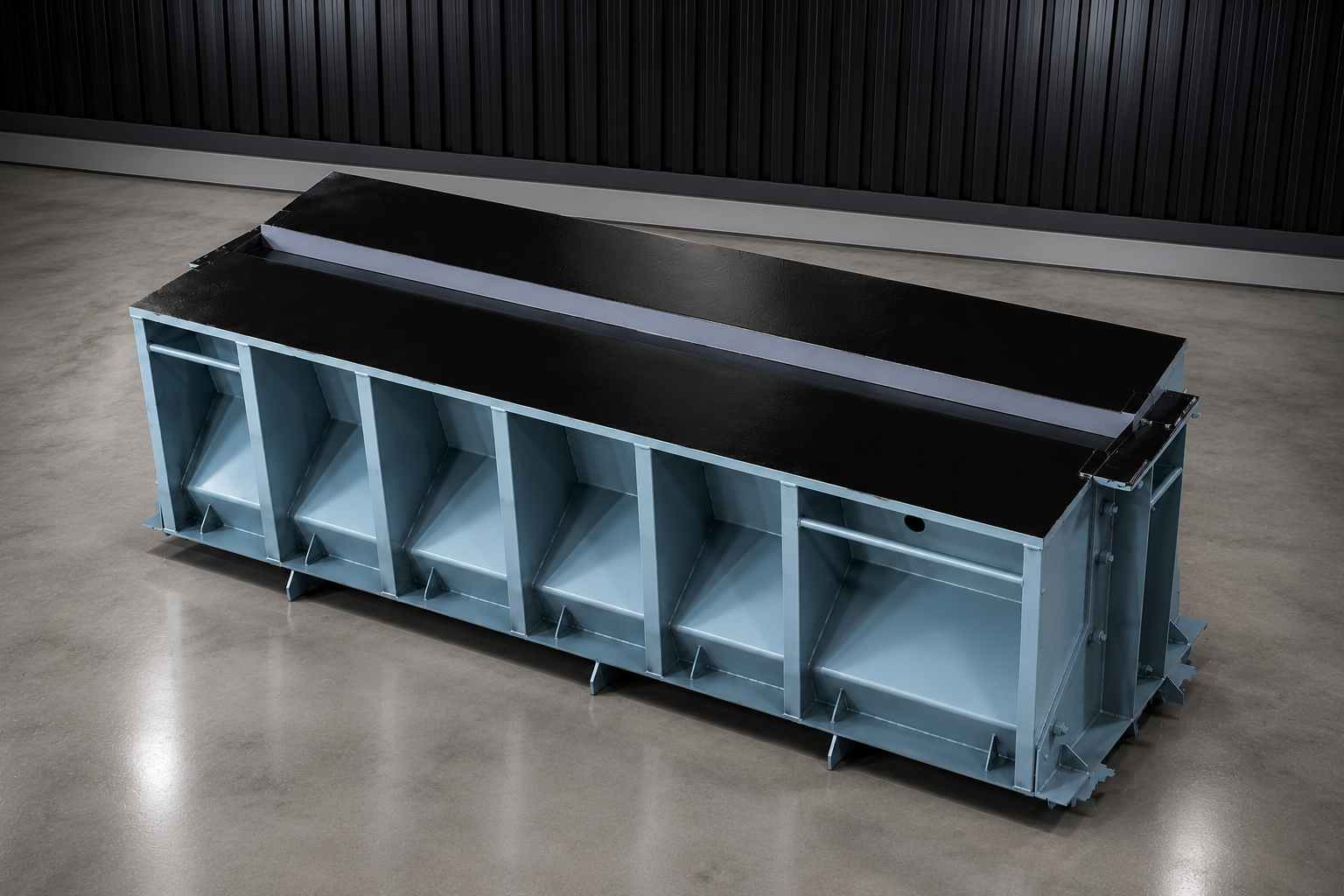
New Jersey and F-shape barrier moulds form road safety barrier profiles. A friction slab barrier combines the barrier and slab configuration. RE wall moulds form facing panels used within a reinforced-earth system. L-shaped retaining wall moulds form a different wall-and-base component.
These are separate product decisions even when used on the same highway project. Identify the approved drawing for each component and avoid treating facing panels as interchangeable with monolithic retaining walls. Use the corresponding product page for the correct quotation.
Specify geometry and connection locations
For barriers, record the profile, segment length, bases, lifting points and connections. For friction slabs, include slab width, thickness and the junction with the barrier. RE panel drawings need shape, thickness, liner detail and connector locations.
Check whether the mould must accommodate several lengths or profiles. Interchangeable liners and removable borders do not imply that every structural dimension is adjustable. Confirm the proposed scope against the required drawing revisions and production quantities.
Review project requirements explicitly
Provide the project specifications and inspection requirements with the drawing. References to IRC, MoRTH or a load class describe requirements to review; they are not a substitute for approval of the concrete component and its reinforcement.
Ask which material and dimensional checks are part of mould supply and which checks belong to concrete production or installation. Keep acceptance criteria clear. The mould configuration should support the approved geometry without making unsupported claims about crash performance or structural capacity.
Plan release, handling and quotation scope
Review access for reinforcement, concrete placement and compaction. Confirm how borders or side panels release and how the finished component is supported during lifting. Include handling clearance and production quantities when asking for a configuration.
Request separate line items for liners, fixtures, optional operating systems and transport. Some infrastructure moulds use fabrication rates per kilogram while others have a starting configuration price. Compare total assemblies for the same drawing and included equipment.