
Wall Production Planning
Plan a Wall Panel Casting Line: Capacity, Finish and Handling
Match the wall panel geometry and finish to a casting system, then check curing space and material handling before selecting capacity.
By Paras Steel Industries ·
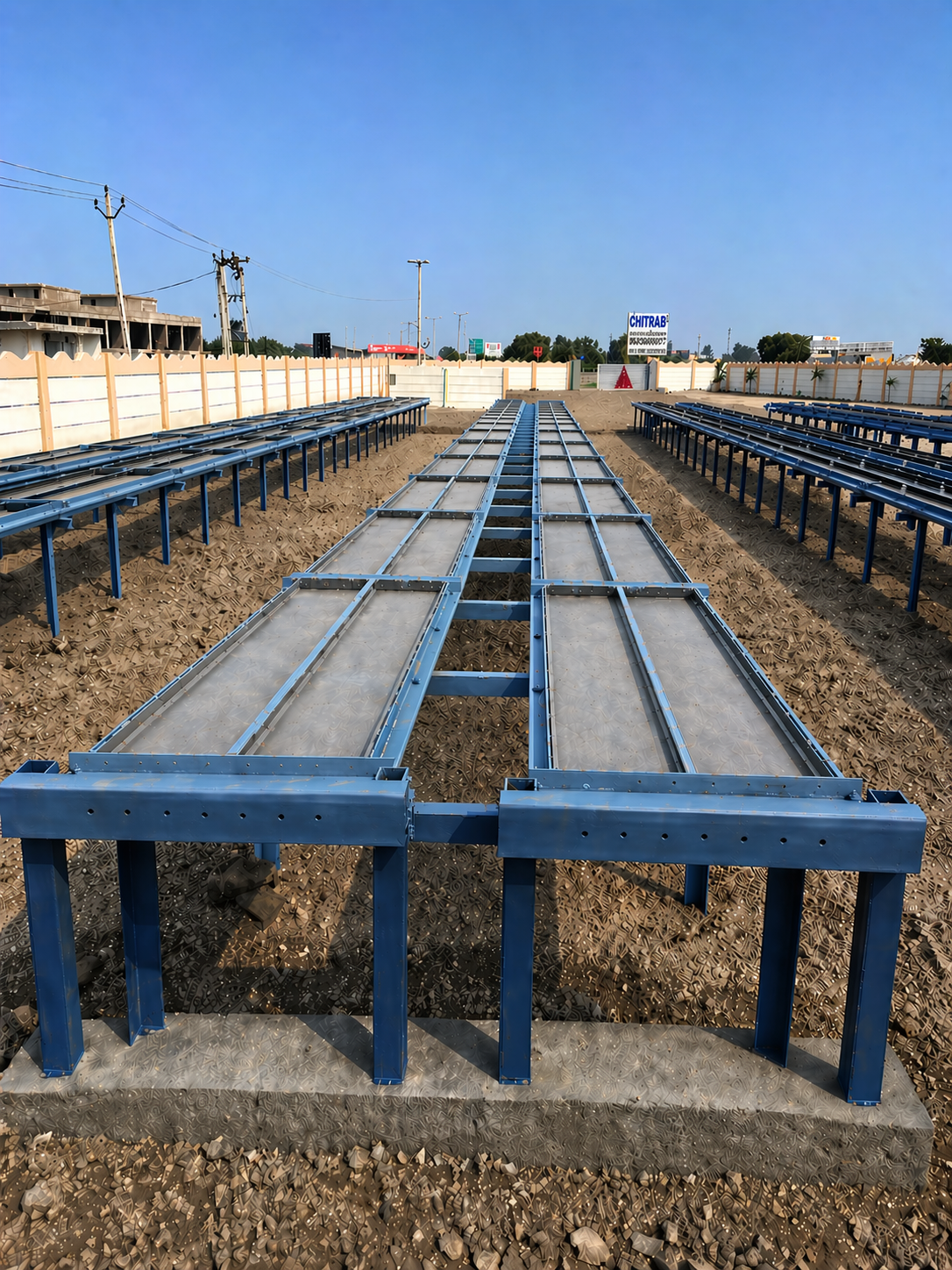
Separate output, panel size and surface finish
A vertical multi-cavity box mould and a compound wall casting line target repeatable panel production. A large wall panel mould addresses a different geometry and handling requirement. Embossed steel panel moulds and aluminium designer moulds address surface patterns and handling choices. Select against a specific concrete panel drawing rather than the broad term boundary wall mould.
List panel length, height, thickness and finish, then identify the column grooves into which the panel must fit. A decorative liner changes the contact surface and may change local concrete thickness. Confirm the pattern and edge details before choosing a production configuration.
Calculate capacity from the whole cycle
Paras lists a 16-panel vertical box and a 32-panel compound wall line. These describe the mould configuration, not a guaranteed daily output. Daily production also depends on filling, compaction, curing, demoulding, cleaning and crew availability.
Work backwards from the required finished panels per shift. Check concrete supply, available mould sets and curing locations. An additional cavity can remain unused if the mixer, handling equipment or storage area is the bottleneck. Ask for the proposed cycle assumptions rather than comparing cavity counts alone.
Check the handling route and opening space
Draw the mould position, access aisles, concrete delivery route and demoulding movement on the plant layout. Confirm crane or other handling clearance and the supports required for cured panels. Larger panels need a handling plan appropriate to their weight and geometry.
For a panel shifting trolley, provide the intended load, panel lengths, support spacing, towing vehicle and yard surfaces. The trolley configuration should be reviewed separately from the mould. Confirm loading, stability and restraint arrangements before moving finished components.
Quote a production system with clear exclusions
Ask whether hydraulic equipment, liners, spare locks, lifting accessories and installation support are included or separately quoted. Steel fabrication rates per kilogram and the starting price of an aluminium designer mould represent different scopes. Request a complete configuration price for the same panel drawing.
A useful enquiry includes panel and post drawings, preferred finish, quantity of mould sets, planned output, handling equipment and delivery location. Keep the commercial compound wall page as the destination for a quotation and use this checklist to prepare the specification.