
Machinery Selection
Match a Concrete Mixer, Vibrating Table and Trolleys to Your Yard
Review the whole concrete and handling workflow before selecting individual machine capacities.
By Paras Steel Industries ·
Begin with the mould filling requirement
Calculate the concrete needed for each approved component and the number of moulds intended to be filled in a shift. Include time for mixing, transport, placement and compaction. A large mould capacity does not translate into output if concrete supply or handling delays the cycle.
The listed mixer is a one-bag, non-hopper tilting drum configuration with drive options. Confirm the actual batching requirement, aggregate specification, available power and discharge height with the supplier. A nominal bag description should not replace a review of usable batch output for your mix.
Specify a vibrating table by loaded conditions
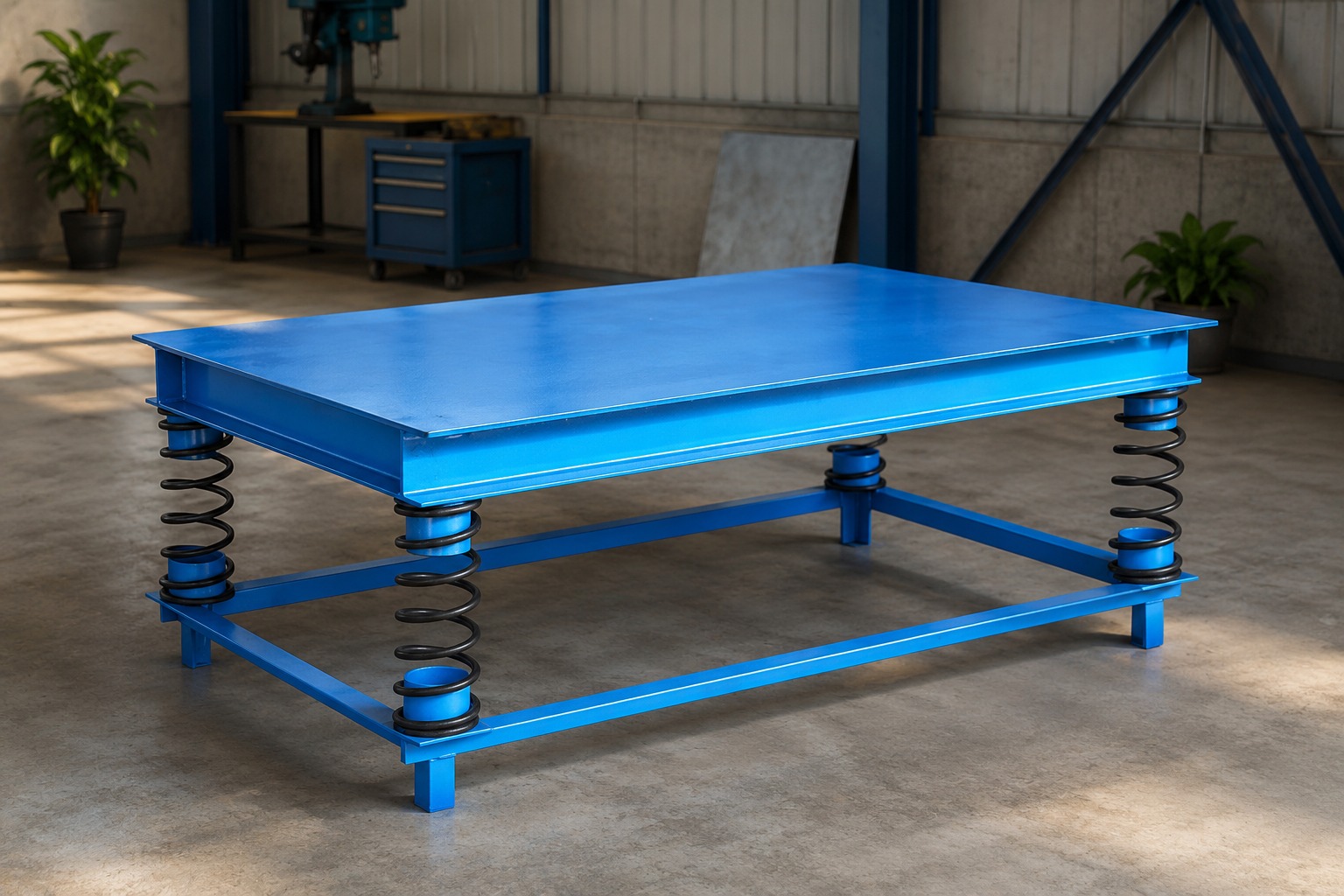
Provide the combined mould, reinforcement and concrete weight along with the mould footprint. Check the proposed deck size, motor rating, power supply and operating controls. Confirm how the mould will be placed and restrained for the intended process.
A table and an external shutter vibrator are different compaction arrangements. Review the mould design and production process before choosing one. Do not assume that a machine is suitable for every precast product merely because its stated payload exceeds the concrete weight.
Separate wet concrete and cured-panel transport
A concrete shifting trolley carries wet material in a tray, while a panel shifting trolley carries cured components on a deck or suitable support arrangement. Their loads, unloading methods and stability needs differ. Select each for its actual task.
Provide loaded weight, route length, surface conditions, gradients, aisle width and the towing vehicle. For panels, identify support positions and restraints. For wet concrete, specify batch volume and the method of discharge. Review these operating requirements before finalising the chassis and deck or tray dimensions.
Compare installed configuration and operating scope
Ask for the selected motor or drive, controls, accessories and supply exclusions. Include delivery, assembly and service requirements in the enquiry. Ensure the proposed equipment can fit the available space and connect to the existing production workflow.
Machine pages list starting prices per piece; larger decks, payloads or different drive configurations may change the quotation. Compare matching configurations and ask for total cost including separately priced items. Send a simple yard layout and the intended mould range to make the enquiry more useful.