
Precast Mould Guide
Vertical Box Mould Hydraulic Power Pack Maintenance: Oil Heating, Filter Blockage and Pump Noise
A hydraulic power pack controls the opening and closing of a heavy-duty iron vertical box mould. Regular inspection of hydraulic oil, filters, pumps, hoses and pressure settings helps prevent uneven shutter movement, production delays and expensive component damage.
By Paras Steel Industries ·
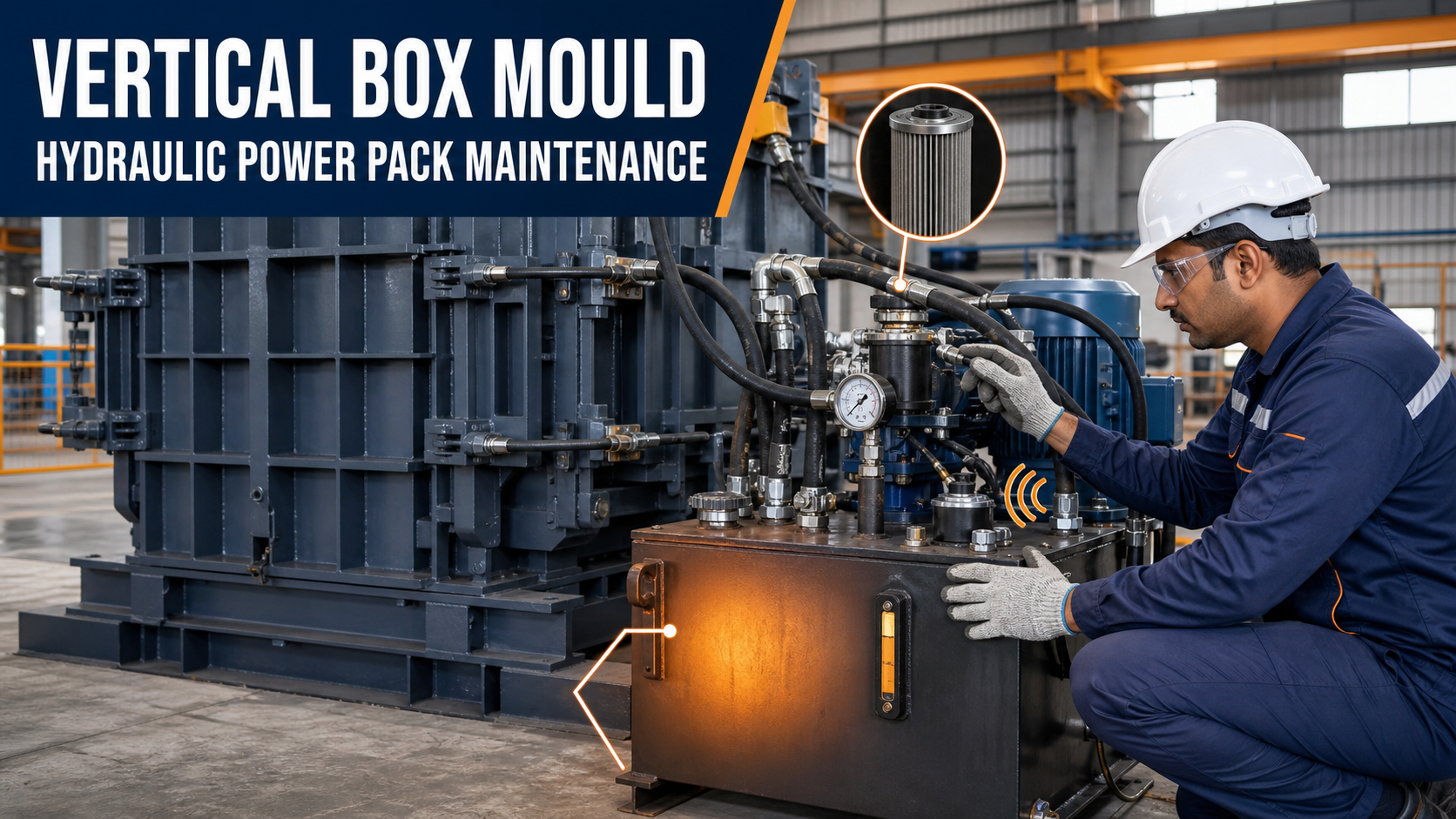
Vertical Box Mould Hydraulic Power Pack Maintenance: Oil Heating, Filter Blockage and Pump Noise
Vertical Box Mould Hydraulic Power Pack Maintenance: Oil Heating, Filter Blockage and Pump Noise
A vertical box mould is designed for the high-output production of precast concrete wall panels. Its hydraulic system helps operators open and close the heavy iron shutters efficiently. The hydraulic power pack is the main source of pressure and oil flow for this operation.
Oil overheating, blocked filters and abnormal pump noise can reduce hydraulic performance and eventually stop production. Proper vertical box mould hydraulic power pack maintenance helps protect the pump, cylinders, valves, seals and mould structure while supporting smooth daily operation.
What Is a Hydraulic Power Pack?
A hydraulic power pack is a self-contained unit that supplies pressurised hydraulic oil to the cylinders installed on a vertical box mould. A typical system may include:
- Hydraulic oil tank - Electric motor - Hydraulic pump - Suction strainer - Return-line filter - Direction-control valve - Pressure-relief valve - Pressure gauge - Hydraulic hoses and fittings - Oil-level and temperature indicators
The exact configuration depends on the mould design, number of hydraulic cylinders and operating requirements.
Why Is Hydraulic Power Pack Maintenance Important?
The hydraulic system must move heavy iron mould shutters in a controlled and balanced manner. Poor maintenance can cause:
- Slow mould opening or closing - Uneven cylinder movement - Excessive hydraulic-oil temperature - Pressure loss - Abnormal pump noise - Oil leakage - Seal and hose damage - Unexpected production stoppage - Shutter misalignment or structural stress
A small hydraulic problem can become expensive if operators continue running the power pack without inspection.
Common Causes of Hydraulic Oil Heating
Hydraulic oil naturally becomes warm during operation. However, excessive heat can indicate that energy is being lost somewhere in the system.
1. Low Hydraulic-Oil Level
Insufficient oil can cause poor circulation, aeration and inadequate cooling. Check the oil level when the cylinders are in the manufacturer-recommended position and the machine is safely stopped.
Do not mix different oil grades without confirming their compatibility.
2. Incorrect Hydraulic-Oil Grade
Oil that is too thick or too thin for the system can increase friction, internal leakage or pump load. Always use the hydraulic-oil grade recommended for the installed power pack and operating conditions.
3. Continuous Relief-Valve Operation
When system pressure repeatedly reaches the relief-valve setting, oil is forced back into the tank and additional heat is generated. This may happen because of:
- Excessive pressure adjustment - Jammed mould shutters - Restricted cylinder movement - Incorrect valve setting - Continuous operation at the end of the cylinder stroke
Operators should release the control lever after completing the required shutter movement.
4. Blocked Hydraulic Filter
A clogged hydraulic filter restricts oil flow and forces the pump to work harder. This can increase oil temperature and reduce cylinder speed.
5. Dirty Oil or Restricted Oil Flow
Concrete dust, moisture, damaged seals and metal particles can contaminate hydraulic oil. Crushed hoses, sharp bends or blocked passages may also restrict oil circulation.
6. Insufficient Cooling
A dirty oil tank, blocked ventilation area or defective oil cooler can reduce heat dissipation. Keep the hydraulic power pack clean and provide sufficient airflow around it.
How to Identify Hydraulic Filter Blockage
Hydraulic filters protect pumps and valves by removing contaminants from the oil. A filter should never be removed permanently to increase oil flow.
Possible signs of filter blockage include:
- Slow cylinder movement - Pressure fluctuation - Abnormal pump noise - Excessive oil temperature - Filter-bypass indicator activation - Reduced return-line flow - Dark or contaminated hydraulic oil
Inspect the filter indicator where provided. Replace the filter element according to the power-pack manufacturer’s recommendation or earlier if contamination is detected.
Before opening a filter housing, switch off the power supply, isolate the system and release stored hydraulic pressure.
Common Reasons for Hydraulic Pump Noise
A healthy hydraulic pump generally produces a consistent operating sound. Knocking, whining, rattling or irregular noise requires immediate investigation.
1. Low Hydraulic-Oil Level
A low oil level can allow air to enter the pump inlet. The pump may produce a whining sound, while cylinder movement can become slow or irregular.
2. Air Entering the Suction Line
Loose suction fittings, cracked seals or damaged pipes may allow air to enter without producing a visible oil leak. Check the suction line and tighten fittings according to the equipment specifications.
3. Blocked Suction Strainer
A restricted suction strainer can prevent sufficient oil from reaching the pump. This may create cavitation, noise, vibration and internal pump damage.
4. Incorrect Motor Rotation
After electrical maintenance or motor replacement, incorrect motor rotation can affect pump operation. The rotation direction should be verified by a qualified technician before continuous operation.
5. Contaminated Hydraulic Oil
Dirt, water and metal particles can damage the pump and control valves. Cloudy, foamy, burnt-smelling or unusually dark oil should be inspected before production continues.
6. Loose Motor-Pump Coupling
A worn, loose or misaligned coupling may create vibration and mechanical noise. Check the coupling only after isolating the electrical power supply.
7. Excessive Hydraulic Pump Wear
Internal pump wear can cause noise, heat, pressure loss and slow operation. If the basic checks do not solve the problem, the pump should be inspected by an experienced hydraulic technician.
Checking Hydraulic Pressure Safely
Hydraulic pressure must be sufficient to move and lock the mould shutters. However, unnecessary pressure can damage seals, hoses, cylinders and mould components.
During pressure inspection:
- Use a properly functioning pressure gauge - Compare readings during opening and closing - Observe whether the pressure rises suddenly - Check for shutter obstruction or hardened concrete - Do not adjust the relief valve without authorisation - Never exceed the power-pack or cylinder pressure rating
High hydraulic pressure should not be used to force a jammed iron shutter. The obstruction must first be identified and removed safely.
Inspecting Hydraulic Hoses and Fittings
Hydraulic hoses should be routed away from sharp iron edges, hot components and moving mould parts. Inspect them for:
- Oil leakage - Cracks or exposed reinforcement - Abrasion marks - Bulging - Twisting - Loose fittings - Sharp bends - Crushing between moving shutters
Never search for a pinhole leak using bare hands. High-pressure hydraulic oil can penetrate the skin and cause a serious injury. Use a safe detection method and seek immediate medical attention if fluid injection is suspected.
Hydraulic Oil Inspection and Replacement
Check the hydraulic oil regularly for changes in colour, smell and appearance. Common warning signs include:
- Milky oil caused by possible water contamination - Foamy oil caused by aeration - Dark oil caused by oxidation or overheating - Visible particles caused by contamination or component wear - Burnt smell caused by excessive oil temperature
Oil-change intervals depend on the hydraulic system, operating environment, oil condition and manufacturer’s instructions. Replacing the oil without cleaning the tank or correcting the contamination source may not solve the problem.
Daily Hydraulic Power Pack Maintenance Checklist
Before starting production:
- Check the hydraulic-oil level - Inspect the tank and floor for oil leakage - Examine hydraulic hoses and fittings - Confirm that the pressure gauge is readable - Visually inspect electrical cables and motor connections - Listen for abnormal pump noise - Test shutter movement without personnel inside the danger area - Confirm that all cylinders move smoothly - Clean concrete slurry and dust from the power-pack area
Weekly Maintenance Checks
Depending on production intensity, conduct the following checks every week:
- Inspect the hydraulic-filter indicator - Check the motor-pump coupling area - Examine cylinder rods for damage or contamination - Inspect hose clamps and hose routing - Check the oil-tank ventilation system - Compare cylinder speed and stroke - Verify that the iron mould shutters are not mechanically binding - Record oil temperature and pressure for comparison
Keeping a maintenance log makes gradual changes in system performance easier to identify.
Hydraulic Power Pack Troubleshooting Guide
Problem: Hydraulic Oil Becomes Excessively Hot
Possible causes:
- Low oil level - Blocked hydraulic filter - Incorrect oil grade - Continuous relief-valve operation - Restricted oil flow - Inadequate cooling
Recommended action:
Stop the system safely. Inspect the oil level, filter condition, pressure behaviour and flow restrictions. Do not continue operation until the cause has been identified.
Problem: Hydraulic Pump Produces a Whining Noise
Possible causes:
- Air entering the suction line - Low hydraulic-oil level - Blocked suction strainer - Incorrect oil viscosity - Pump cavitation
Recommended action:
Inspect the oil level, suction connections, strainer and oil condition. Ask a hydraulic technician to inspect the pump if the noise continues.
Problem: Mould Shutters Move Slowly
Possible causes:
- Blocked hydraulic filter - Low pump flow - Internal oil leakage - Worn hydraulic pump - Cylinder-seal leakage - Mechanical obstruction in the mould
Recommended action:
Check whether all cylinders are moving slowly or only one cylinder is affected. This helps separate a power-pack problem from a cylinder, hose or mechanical-alignment problem.
Problem: Hydraulic Pressure Fluctuates
Possible causes:
- Air inside the hydraulic system - Low hydraulic-oil level - Contaminated control valve - Hydraulic pump wear - Faulty pressure gauge - Unstable relief-valve operation
Recommended action:
Stop production and inspect the system systematically. Avoid repeatedly adjusting the hydraulic pressure without identifying the actual cause.
How to Prevent Hydraulic-System Contamination
Precast concrete plants contain cement dust, concrete slurry and moisture. These contaminants can quickly damage precision hydraulic components.
Follow these preventive practices:
- Keep the hydraulic-oil tank cap closed - Clean the area before opening any hydraulic connection - Store new hydraulic oil in sealed containers - Use clean oil-transfer equipment - Replace damaged breathers and seals - Cap disconnected hydraulic hoses immediately - Never place dirty tools inside the oil tank - Remove spilled concrete slurry before it hardens
Vertical Box Mould and Hydraulic System Alignment
Not every hydraulic problem originates inside the power pack. A bent shutter, hardened concrete at a joint, damaged hinge, tight guide or misaligned lock can increase the hydraulic pressure required to operate the mould.
Before blaming the hydraulic pump, inspect the complete iron vertical box mould for:
- Shutter alignment - Guide and hinge condition - Locking-point adjustment - Hydraulic-cylinder mounting alignment - Hardened concrete on contact surfaces - Unequal cylinder stroke - Structural distortion
The hydraulic system should move the mould smoothly. It should not be used to overcome severe mechanical resistance.
When Should You Call a Hydraulic Technician?
Professional inspection is recommended when:
- The pump produces continuous abnormal noise - Hydraulic oil repeatedly overheats - Metal particles are found in the oil - Hydraulic pressure cannot be maintained - The electric motor draws excessive current - Cylinder movement remains unstable - A relief valve requires adjustment - A pump, valve or cylinder requires internal repair
Hydraulic components can contain stored energy even after the motor is switched off. Repairs should only be performed by trained personnel using proper electrical isolation and pressure-release procedures.
Conclusion
Regular vertical box mould hydraulic power pack maintenance is essential for smooth shutter movement, reliable production and longer component life. Oil heating, filter blockage and pump noise should be treated as early warning signs instead of normal operating conditions.
Daily oil-level checks, clean filters, correctly routed hoses, suitable hydraulic oil and proper mould alignment can prevent many common failures.
Paras Steel Industries manufactures heavy-duty iron precast moulds and machinery for accurate and efficient concrete production. Customers can discuss customised vertical box mould and hydraulic-system requirements according to their required panel sizes and production capacity.