
Precast Mould Guide
How to Select the Right Size U Drain Mould for Your Drainage Project
Choosing the correct U Drain Mould size is essential for producing durable precast drainage channels that fit the project requirement and install smoothly on site.
By Paras Steel Industries ·
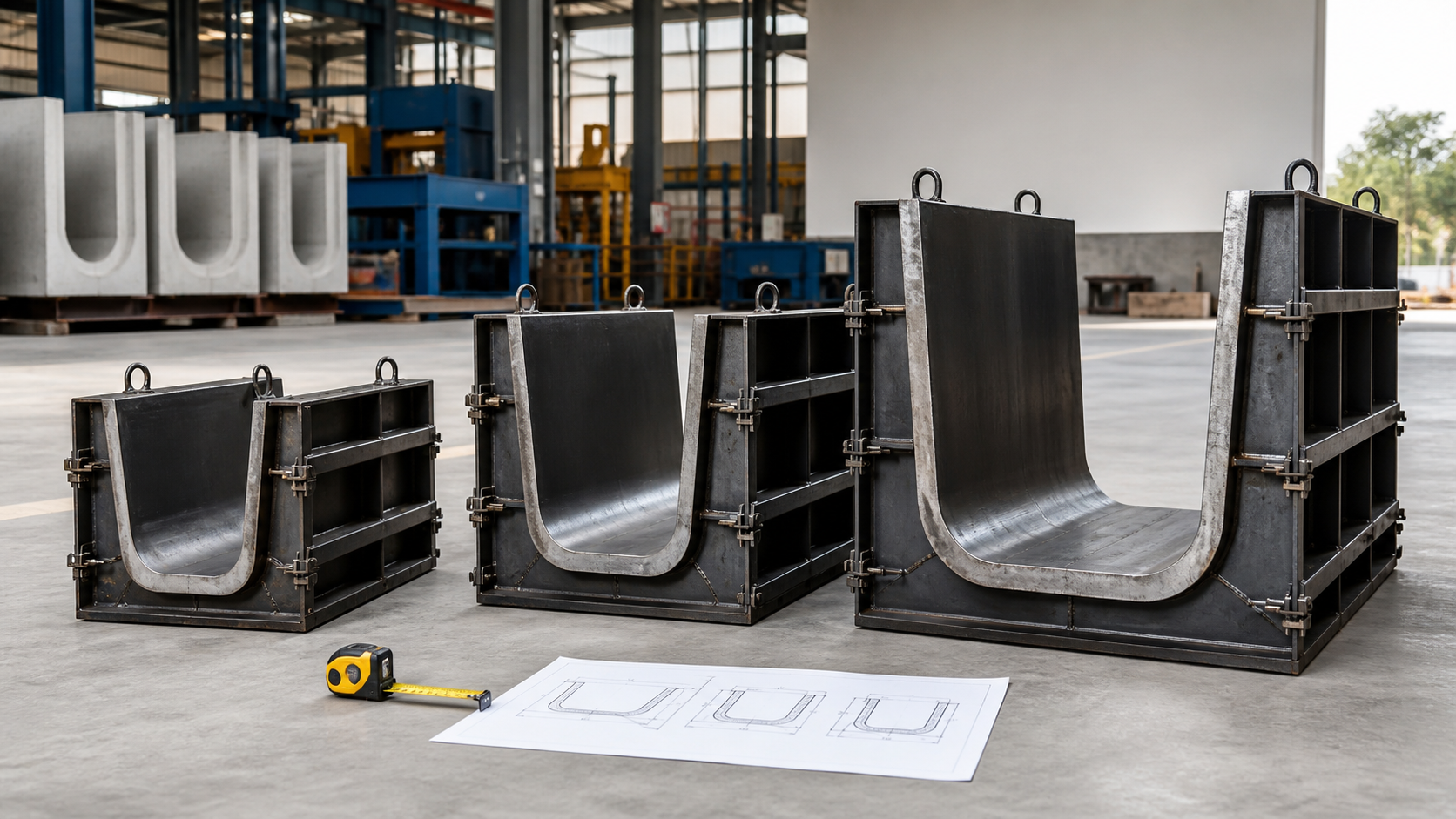
How to Select the Right Size U Drain Mould for Your Drainage Project
How to Select the Right Size U Drain Mould for Your Drainage Project
U drains are widely used for stormwater drainage, industrial areas, highways, housing projects, factories, municipal works and infrastructure developments. A correctly sized precast U drain helps manage water flow, improves site drainage and supports faster installation.
However, selecting a U Drain Mould is not only about choosing a length or width. The mould must match the approved drainage design, site condition, installation method and expected production quantity.
This guide explains the important factors to consider before selecting the right size U Drain Mould for your drainage project.
Understand the Purpose of the U Drain
First, identify where the precast U drain will be used.
Common applications include:
Roadside drainage Industrial drainage Housing projects Factory premises Agricultural drainage Municipal stormwater drainage Highway and infrastructure projects Commercial property drainage
The purpose of the drain affects the required internal width, depth, wall thickness and loading capacity. A small drainage channel for a residential project will not need the same size as a heavy-duty drain used near an industrial road or highway.
Use Approved Drawings Before Finalizing the Mould
Always finalize U Drain Mould dimensions according to approved project drawings. Drainage design should consider water flow, slope, soil condition, road loading, cover arrangement and installation method.
Do not select a U drain size only by looking at a similar product online. The correct dimensions should be confirmed by the project engineer, consultant or approved design drawing.
Share the following details with your mould manufacturer:
Internal width required Internal depth required Overall length Wall thickness Base thickness Required cover or slab arrangement Expected concrete grade Reinforcement details Site load condition
These details help the manufacturer design a mould that produces accurate and consistent precast U drains.
Choose the Correct Internal Width
The internal width determines how much water the drain can carry. Wider drains are generally used where the water flow is higher or where the drainage line collects water from a larger area.
Before selecting the width, consider:
Expected water flow Catchment area Rainwater requirement Connection with other drains Cleaning and maintenance access Space available at the site
The internal width should provide sufficient flow capacity without creating unnecessary material cost or installation difficulty.
Select the Right Internal Depth
The internal depth is important for carrying water safely through the drainage system. A deeper U drain may be required where the drainage line receives more water, where the site has a slope or where underground utility conditions need to be considered.
When selecting depth, check:
Required water carrying capacity Ground level and slope Connection level with nearby drains Outlet level Road or pavement level Cleaning access requirement
A shallow drain may overflow during heavy rainfall, while an unnecessarily deep drain can increase concrete consumption and handling weight.
Decide the U Drain Length
Precast U drains are commonly manufactured in standard lengths for easier transport, handling and installation. Longer units can reduce the number of joints, but they may be heavier to lift and transport.
When selecting the length, consider:
Available lifting equipment Vehicle transport capacity Site access Installation speed Joint design Product weight
The mould should produce units that are practical to handle from the factory to the project location.
Wall Thickness and Base Thickness Matter
Wall thickness and base thickness affect the strength and durability of the U drain. Heavy-duty drainage channels may need thicker walls and bases depending on soil pressure, traffic load, installation depth and design requirement.
The mould must be designed with sufficient rigidity so that the final precast product maintains the required thickness consistently during repeated casting.
Do not reduce wall thickness only to save material. The final product should follow the approved engineering requirement.
Consider Traffic and Load Conditions
A U drain installed in a garden or pedestrian area will have different requirements from a drain installed near a truck movement area, industrial yard or road crossing.
Ask these questions:
Will vehicles pass near or over the drain? Will the drain require a cover slab? What type of cover arrangement is required? Is the drain installed in soft soil or compacted ground? Will the drain be installed underground or above ground?
Load conditions influence mould design, reinforcement space, concrete thickness and the need for cover elements.
Choose Between Standard and Custom U Drain Moulds
Standard U Drain Mould sizes can be useful for common applications and regular production. Custom U Drain Moulds are better when the project requires specific dimensions, special joints, cover details, lifting hooks or connection arrangements.
Custom moulds are useful for:
Municipal drainage projects Industrial drainage systems Road and highway works Large housing projects Special drainage drawings Projects with non-standard dimensions
A mould manufacturer can prepare the design according to your drawing and production requirement.
Plan the Production Setup
Before ordering the mould, make sure your unit has the right production setup.
A U drain production line may require:
Concrete Mixer Machine Concrete Vibrator Table Concrete Shifting Trolley Lifting Arrangement Curing Area Finished Product Storage Area Transport Loading Space
The mould size should match the capacity of your vibrator table, lifting equipment and storage area.
Check Mould Features Before Buying
A quality U Drain Mould should support easy casting, vibration and demoulding.
Important features may include:
Heavy-duty iron structure Accurate internal dimensions Strong base frame Reinforcement ribs Clamps and locking system Easy opening arrangement Lifting hooks Smooth mould surface Custom end plates or joint details
Regular cleaning and maintenance will also help maintain smooth product finishing and long mould life.
Conclusion
The right U Drain Mould size depends on the approved drainage design, water flow requirement, internal width, depth, wall thickness, load condition and handling capacity.
A properly designed mould helps produce accurate, strong and consistent precast drainage channels for site installation. Before placing an order, share your approved drawing and production requirement with an experienced mould manufacturer.
Paras Steel Industries manufactures heavy-duty iron U Drain Moulds in custom sizes for drainage, industrial, municipal and infrastructure projects across India.