
Precast Business Guide
How to Start a Precast Concrete Boundary Wall Manufacturing Unit in India
A precast boundary wall unit can supply fast, durable and uniform wall solutions for farms, residential sites, industries and commercial projects. This guide explains the basic setup requirements.
By Paras Steel Industries ·
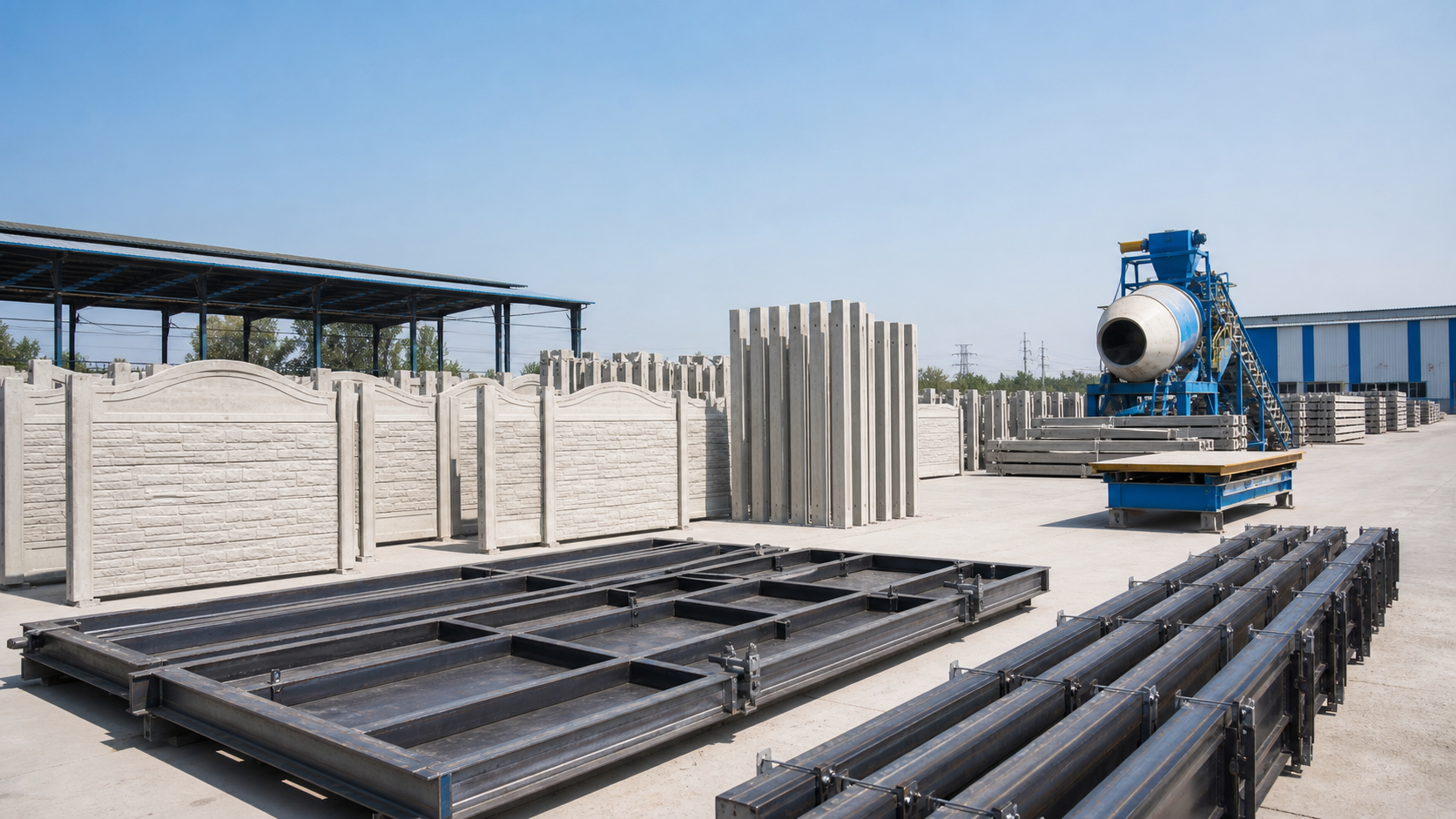
How to Start a Precast Concrete Boundary Wall Manufacturing Unit in India
How to Start a Precast Concrete Boundary Wall Manufacturing Unit in India
Precast concrete boundary walls are widely used for farms, residential layouts, industrial sites, warehouses, commercial properties, government projects and land protection. Compared with traditional brick boundary walls, precast wall systems can be manufactured in advance, transported to site and installed faster.
Starting a precast concrete boundary wall manufacturing unit requires proper planning, the right moulds and machinery, a suitable production area and strong quality control. This guide explains the main points to consider before starting a precast boundary wall business in India.
Understand the Precast Boundary Wall System
A typical precast boundary wall system includes concrete wall panels and reinforced concrete poles. The poles are installed at fixed distances, and wall panels are placed between them to create a strong boundary.
Depending on the project requirement, the wall can be plain, decorative, embossed, solid or designed with different heights and panel patterns.
The advantage of this system is speed. Wall panels and poles can be manufactured in a controlled production area instead of building the full wall with bricks at the project site.
Choose Your Target Market
Before purchasing machinery or moulds, identify the type of customer you want to serve.
Common customers for precast boundary walls include:
Farm owners Residential plot developers Industrial units Warehouses Schools and institutions Commercial properties Construction contractors Government and infrastructure contractors
Your target market will help you decide the panel design, pole size, production capacity and delivery arrangement.
Select the Right Production Location
A precast boundary wall unit needs sufficient space for raw materials, mould casting, curing, finished product storage and vehicle movement.
Choose a location with:
Good road access for material delivery and finished product transport Sufficient open space for casting and storage Reliable electricity and water supply Space for concrete mixing and vibration Safe loading and unloading area Drainage arrangement to avoid water accumulation
The production area should be planned so that raw materials, moulds, fresh cast products and finished products move smoothly without unnecessary handling.
Essential Moulds for a Boundary Wall Unit
Moulds are the core of your precast production setup. Good mould design helps produce wall panels and poles with accurate dimensions, smooth finishing and reliable repeatability.
A basic boundary wall production unit may require:
Compound Wall Panel Moulds Design Boundary Wall Moulds Fencing Pole Moulds Column Pole Moulds Y Shape Pole Moulds Footing Moulds Footing with Column Moulds
Heavy-duty iron moulds are commonly used for structural and repeated casting applications. Aluminium moulds can also be used for selected decorative or embossed boundary wall designs where lighter handling and detailed patterns are required.
Always choose moulds according to your required panel length, height, thickness, pole design and expected production quantity.
Machinery Required for Precast Boundary Wall Production
The machinery requirement depends on your planned output. A small or medium unit can begin with essential equipment and expand later.
Common machinery includes:
Concrete Mixer Machine Concrete Vibrator Table Panel Shifting Trolley Concrete Shifting Trolley Material Handling Equipment Weighing and Measuring Tools Water Storage Arrangement Curing Area Equipment
A concrete mixer helps prepare a consistent concrete mix. A vibrator table helps remove air pockets and supports a denser, smoother precast finish. Trolleys and lifting equipment reduce manual effort and help move fresh concrete and finished panels safely.
Plan Your Product Sizes and Designs
Standardization is important for efficient production. Start with a limited number of popular sizes and designs instead of trying to manufacture every possible variation on day one.
Decide:
Wall panel length Wall panel height Wall panel thickness Pole height Pole cross-section Distance between poles Plain or decorative panel pattern Required reinforcement arrangement
Once your standard products are performing well, you can offer custom sizes for specific client requirements.
Focus on Concrete Quality
The final strength and appearance of the boundary wall depend on concrete quality, mould condition, vibration and curing.
For better quality, maintain consistency in:
Cement quality Sand and aggregate grading Water quantity Concrete mix proportion Reinforcement placement Vibration time Curing process Demoulding time
Do not remove fresh products from moulds before they have achieved sufficient strength. Early demoulding can cause cracks, edge damage or distortion.
Create a Proper Curing and Storage Area
After casting, precast wall panels and poles need proper curing. This helps the concrete gain strength and reduces the risk of cracks.
Keep a planned curing area where products can remain undisturbed. Finished panels and poles should be stored on level supports to avoid bending, chipping or edge damage.
Products should also be handled carefully during loading and transportation. Use suitable lifting points, trolleys or equipment instead of dragging the panels.
Build a Quality Control Routine
A simple quality control routine can protect your reputation and reduce product rejection.
Before casting, check:
Mould cleanliness Mould alignment Release agent application Reinforcement position Concrete mix consistency Vibrator table operation
After casting, check:
Panel thickness Pole dimensions Surface finish Visible cracks Edge quality Pattern consistency Product strength before transport
Regular mould cleaning and maintenance are equally important. Remove concrete residue after each cycle and inspect hinges, clamps, welds and moving parts.
Plan Delivery and Installation Support
Boundary wall panels and poles are heavy products. Delivery planning is important for customer satisfaction and cost control.
Before accepting an order, confirm:
Site location Road access for delivery vehicle Unloading arrangement Required quantity Wall height and layout Foundation readiness Installation team requirement
Offering delivery guidance and installation support can help your business build trust with contractors and property owners.
Market Your Boundary Wall Business
Your marketing should show real production capability and product quality.
Useful marketing channels include:
Google Business Profile Your website product pages SEO blogs WhatsApp Business catalogue Instagram and Facebook factory videos YouTube product demonstrations IndiaMART and Justdial listings Local contractor and builder networks
Use clear real photos of moulds, panels, poles, factory work, casting process, finished walls and deliveries. Customers are more likely to enquire when they can see actual manufacturing work.
Choose a Reliable Mould and Machinery Manufacturer
A boundary wall unit depends on its equipment. Poor mould design can create uneven panels, slow down production and increase maintenance cost.
Before buying moulds or machinery, discuss:
Required product dimensions Production quantity Material preference Custom design requirement Vibration and handling setup Delivery timeline After-sales support
Paras Steel Industries manufactures heavy-duty iron precast moulds and machinery for boundary wall production and other precast concrete applications. Custom mould sizes and designs are available for projects across India.
Conclusion
Starting a precast concrete boundary wall manufacturing unit can be a practical opportunity when you have the right market, space, moulds, machinery and quality process. Begin with standard wall panel and pole designs, maintain consistent production quality and expand your range as customer demand grows.
A well-planned setup can help you supply durable precast boundary wall solutions to farms, residential projects, industrial sites and commercial developments across India.