
Precast Mould Guide
10 Questions to Ask Before Buying a Precast Concrete Mould
Buying a precast concrete mould is a long-term production decision. The right questions help you avoid sizing mistakes, poor output quality and unnecessary maintenance costs.
By Paras Steel Industries ·
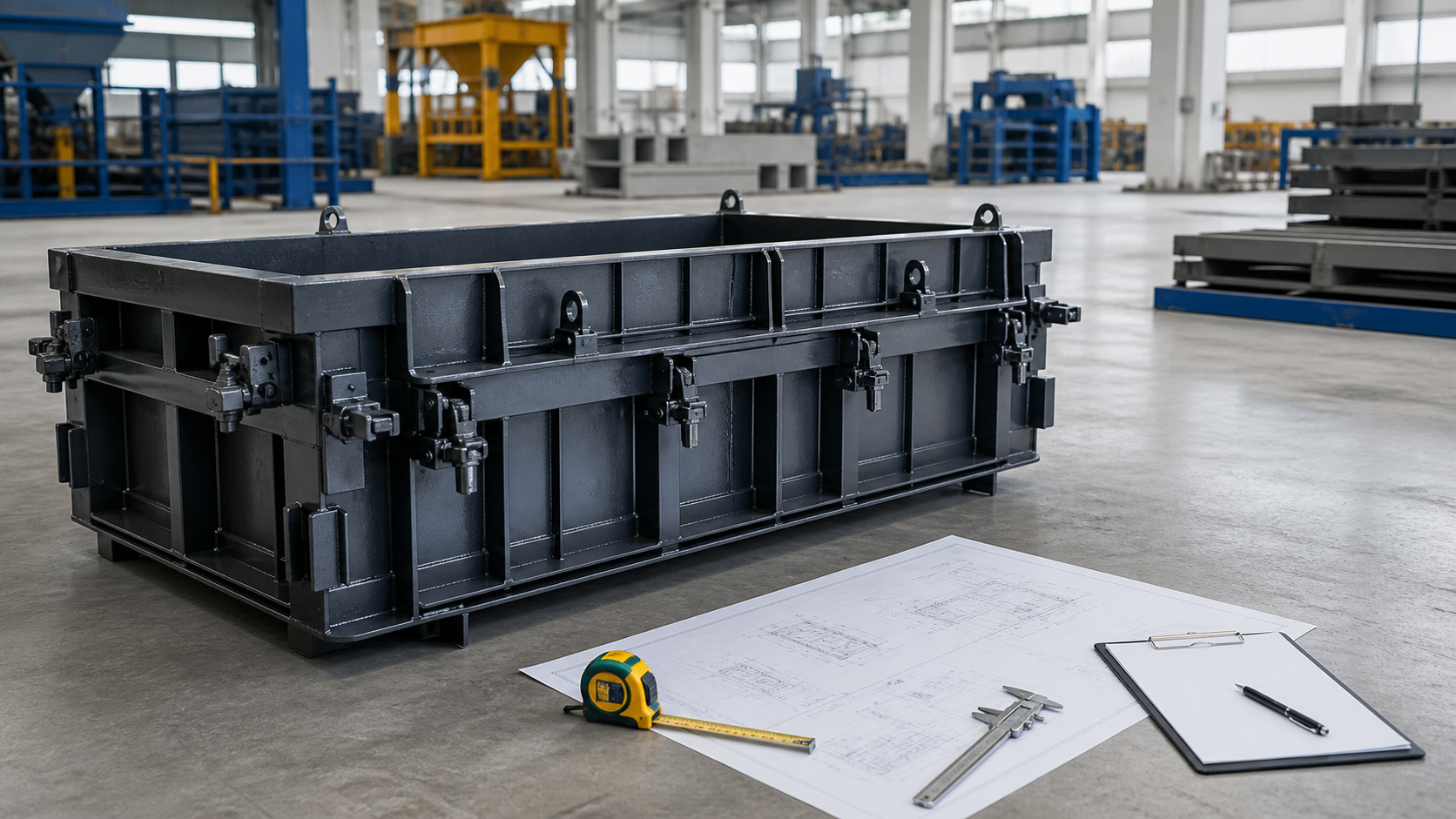
10 Questions to Ask Before Buying a Precast Concrete Mould
10 Questions to Ask Before Buying a Precast Concrete Mould
A precast concrete mould is not just a fabrication item. It directly affects the shape, dimensions, surface finish, production speed and consistency of your final concrete product.
Whether you want to produce U drains, box culverts, boundary wall panels, poles, cable trenches, retaining wall panels or manhole covers, choosing the correct mould is important. A wrong mould size or weak design can lead to production delays, poor finishing and higher maintenance costs.
Before buying a precast concrete mould, ask these ten important questions.
1. What Precast Product Will You Manufacture?
Start with the final concrete product. Clearly define whether you need a mould for:
U Drain Box Culvert Compound Wall Panel Fencing Pole Column Pole Cable Trench Highway Barrier Retaining Wall Panel Footing Manhole Cover Door Frame Window Frame
Each product needs a different mould design, opening arrangement, reinforcement space and concrete handling method.
Share a drawing, sketch or product sample with the mould manufacturer before finalizing the design.
2. What Dimensions Do You Need?
Accurate dimensions are essential for precast products. Ask for the exact mould dimensions based on your required product length, width, height, thickness and joint details.
For example, a boundary wall panel mould may require a specific panel length and thickness, while a box culvert mould needs accurate internal dimensions and wall thickness.
Also discuss allowable tolerances. Small dimensional errors can create fitting problems during site installation.
3. Which Material Is Suitable: Iron or Aluminium?
Material selection depends on the product type and production requirement.
Heavy-duty iron moulds are suitable for large, structural and repeated casting applications such as U drains, box culverts, cable trenches, poles, barriers and retaining wall panels.
Aluminium moulds can be useful for selected decorative or embossed boundary wall designs where lighter handling and detailed patterns are important.
Ask the manufacturer which material is suitable for your product, expected production volume and handling setup.
4. How Many Casts Will the Mould Handle?
Production quantity is an important factor. A mould designed for occasional casting may not be suitable for high-volume daily production.
Tell the manufacturer:
Expected casts per day Expected casts per month Type of concrete mix Vibration method Handling method Required production life
A properly designed heavy-duty mould can support repeatable casting and reduce downtime.
5. Does the Mould Have Easy Demoulding Arrangement?
Easy demoulding saves time and reduces product damage. Ask how the mould will open and how the concrete product will be removed after casting.
Important features may include:
Side opening panels Hinges Clamps Locking system Lifting hooks Removable end plates Release agent application area
The mould should allow workers to remove the product safely without damaging edges, corners or decorative patterns.
6. Is the Mould Strong Enough for Vibration and Concrete Pressure?
During casting, fresh concrete creates pressure on the mould. Vibration also creates force on the structure.
Ask about:
Mould frame strength Reinforcement ribs Plate thickness Weld quality Clamps and locking system Base frame stability
A rigid mould helps maintain product shape and reduces the risk of bulging, leakage or dimensional variation.
7. Can the Mould Be Customized?
Many projects require custom dimensions. Standard mould sizes may not always match your client requirement.
Ask whether the manufacturer can customize:
Length Width Height Thickness Panel design Emboss pattern Pole section Lifting arrangement Opening system
Custom mould design is especially useful for infrastructure, drainage, boundary wall and industrial projects.
8. What Machinery Will Be Required With the Mould?
A mould works best when the supporting production setup is planned properly.
Depending on the product, you may need:
Concrete Mixer Machine Vibrator Table Concrete Shifting Trolley Panel Shifting Trolley Lifting Equipment Curing Area Storage Space
Ask the mould manufacturer for guidance on the machinery and handling equipment required for your target production capacity.
9. What Maintenance Will the Mould Need?
Regular maintenance helps extend mould life and protect product quality.
Ask about the maintenance routine for:
Concrete cleaning after casting Release agent use Hinge lubrication Clamp inspection Weld checking Surface repair Storage method
A well-maintained mould produces smoother concrete products and reduces repair expenses.
10. Does the Manufacturer Provide Technical Support?
Technical support is valuable, especially when starting a new precast production unit or launching a new product.
Before purchasing, ask whether the manufacturer can provide:
Product design guidance Mould operating instructions Production setup support Custom size consultation Maintenance advice Delivery support After-sales assistance
A manufacturer who understands precast production can help you select a mould that matches your actual requirement.
Final Checklist Before Ordering
Before confirming your order, make sure you have shared:
Product drawing or dimensions Required quantity Expected production volume Material preference Required mould features Available machinery Delivery location Target production date
Conclusion
Buying a precast concrete mould requires more than comparing prices. The right mould should match your product design, production volume, concrete process and handling arrangement.
By asking these ten questions, you can choose a durable and practical mould that supports consistent precast production.
Paras Steel Industries manufactures custom heavy-duty iron precast concrete moulds and machinery for projects across India. Contact our team for guidance on the right mould size, design and production setup for your requirement.