
Precast Infrastructure Moulds
Precast Concrete Footing Mould: Types, Benefits and Applications
Precast concrete footing moulds help manufacturers produce strong, accurately sized foundations for poles, columns, boundary walls and infrastructure projects.
By Paras Steel Industries ·
Precast Concrete Footing Mould: Types, Benefits and Applications
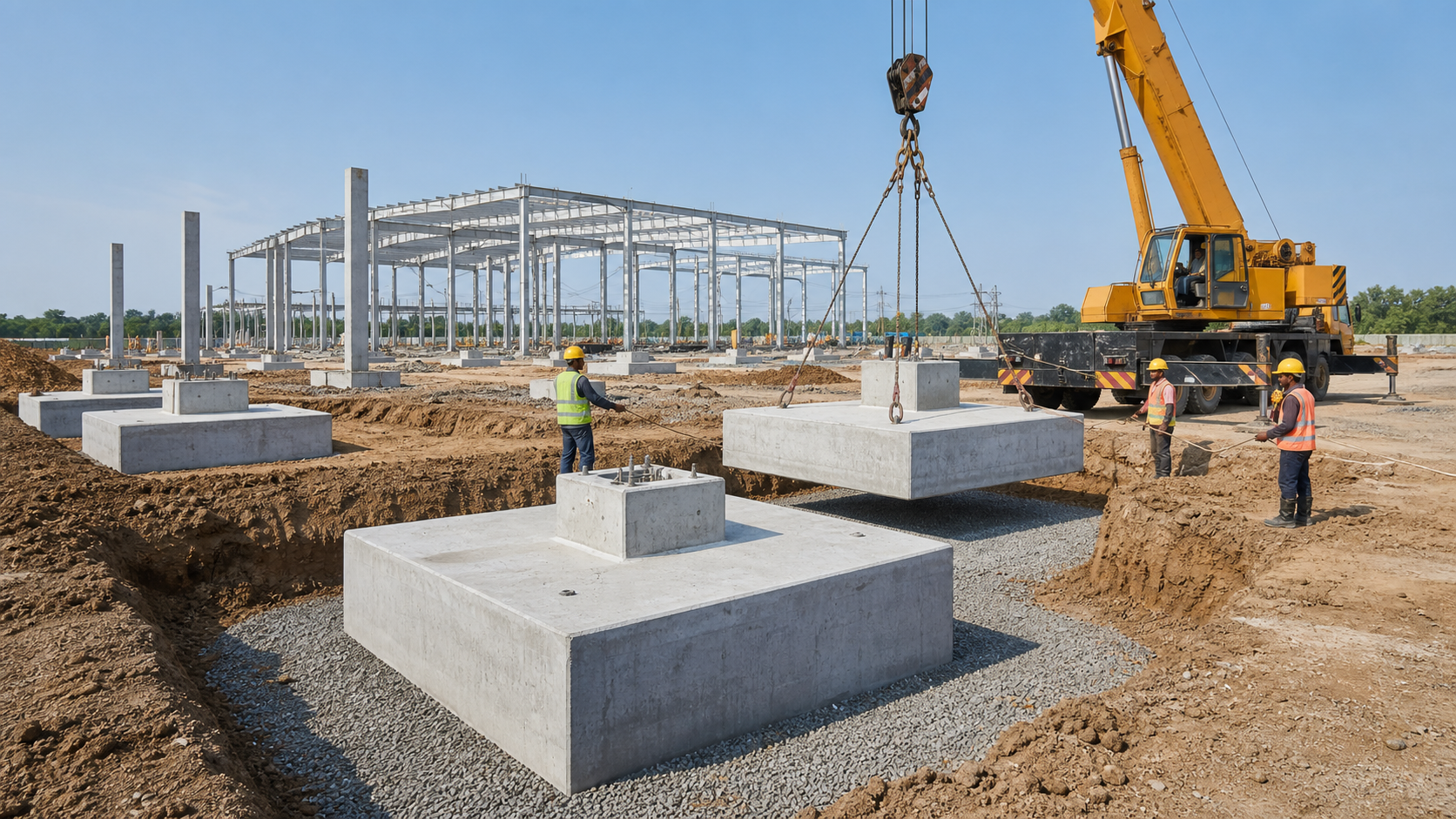
Precast concrete footings are used to provide a stable foundation for poles, columns, boundary walls, fencing systems, sign structures and many infrastructure applications. They are manufactured in advance and installed at the project site, helping construction teams complete foundation work faster and with more consistent quality.
For precast manufacturers, the quality of the footing mould is essential. A strong steel footing mould helps produce concrete footings with accurate dimensions, clean edges and reliable strength. It also allows the same footing design to be manufactured repeatedly for large projects.
What is a precast concrete footing mould?
A precast concrete footing mould is a steel form used to manufacture concrete foundation units in a controlled production environment. Concrete is poured into the mould with the required reinforcement, compacted properly and cured until it reaches sufficient strength.
After curing, the finished footing is removed from the mould. The mould is cleaned, prepared with a release agent and reused for the next casting cycle.
Footing moulds can be made in square, rectangular, tapered or custom shapes. They can also include provisions for pole pockets, column sockets, anchor bolts, reinforcement cages, lifting hooks and drainage details according to the project requirement.
Why precast concrete footings are preferred
Precast footings reduce the amount of concrete work required at the construction site. Instead of waiting for site-cast foundations to cure, ready-made footing units can be transported and installed when the site is prepared.
This helps reduce project timelines, improves planning and reduces dependency on weather conditions. Precast production also allows better control over concrete compaction, reinforcement placement and dimensions.
Precast footings are especially useful for projects requiring many identical foundation units, such as boundary wall installations, solar structures, fencing systems, utility poles and industrial developments.
Types of precast concrete footing moulds
Square footing moulds are commonly used for poles, boundary wall posts, fencing posts and smaller column supports. They provide a stable base and can be manufactured in different sizes according to the required load.
Rectangular footing moulds are suitable for applications where the foundation needs a longer base or where the supporting structure has a specific orientation. These may be used for wall panels, columns, sign structures or utility installations.
Tapered footing moulds are designed with a wider base and a narrower top. This type of footing can be used where the foundation design requires better load distribution and structural support.
Footing-with-column moulds combine the footing and supporting column or post connection in one precast unit. This can help reduce installation time for boundary walls, fencing systems and certain infrastructure structures.
Custom footing moulds are manufactured according to specific project drawings. They can include bolt pockets, embedded parts, cable openings, lifting arrangements and special connection details.
Importance of high-quality footing moulds
A footing must fit correctly with the pole, column or structure it supports. A poor-quality mould can create inaccurate dimensions, uneven surfaces or incorrect socket locations, leading to installation problems at the project site.
A high-quality steel footing mould maintains its shape during concrete pouring, vibration and repeated demoulding. Heavy-duty steel plates, strong stiffeners and accurate welding help prevent mould movement and distortion.
Smooth internal surfaces improve the finish of the concrete footing and make cleaning easier after casting. Proper mould design also helps workers place reinforcement and embedded components correctly.
Key features to check before buying a footing mould
Before selecting a footing mould, confirm the required footing size, shape, height, base dimensions and load requirement. The mould should match the approved structural drawing and project specifications.
The steel structure should be rigid enough for repeated production. Strong side panels, proper stiffeners, clamps and locking systems help maintain the mould shape during casting.
If the footing requires pole pockets, anchor bolt arrangements, reinforcement provisions or embedded plates, these details should be included in the mould design. A custom mould manufacturer can provide a solution based on the exact project requirement.
Easy demoulding is also important. Removable panels, practical locks and lifting provisions help workers remove the cured footing safely without damaging its edges.
Applications of precast concrete footings
Precast concrete footings are used for compound wall posts, fencing poles, electric poles, solar mounting structures, sign boards, light poles, industrial structures and small building foundations.
They are also useful for agricultural fencing, warehouses, factories, residential layouts, commercial sites and infrastructure developments. The correct footing design should always be selected according to the structural load, soil condition and approved engineering requirement.
For projects with many repeated foundation points, precast footings can improve installation speed and maintain consistent quality across the site.
Benefits of custom footing moulds
Custom footing moulds allow manufacturers to produce concrete foundation units according to exact design and installation requirements. A custom mould can include specific base dimensions, pole sockets, bolt pockets, lifting points, embedded parts and reinforcement details.
This reduces the need for site-level modifications and helps ensure that every footing fits correctly with the supporting structure. For large projects, custom moulds support uniform production and faster installation.
Accurate custom footings also help create a more organised construction workflow. Units can be manufactured, inspected and delivered according to the project schedule.
How to maintain steel footing moulds
Regular cleaning and maintenance help increase the working life of a steel footing mould. Concrete residue should be removed after every casting cycle before it hardens. Apply a suitable mould release agent before pouring concrete to improve demoulding.
Inspect bolts, clamps, hinges, locking systems and weld joints regularly. Repair loose or damaged parts before the next casting cycle to avoid mould movement or defects in the finished footing.
When not in use, store the mould in a dry area and protect exposed steel surfaces from moisture. Proper maintenance helps prevent rusting, reduces repair costs and supports reliable production.
Choose the right precast concrete footing mould manufacturer in India
A reliable footing mould manufacturer should understand steel fabrication, precast concrete production and foundation design requirements. The manufacturer should be able to provide accurate dimensions, durable steel construction, strong welding and custom mould support.
Paras Steel Industries manufactures steel moulds for precast concrete and infrastructure applications. From footing moulds and pole moulds to wall panel moulds, box culvert moulds and custom precast solutions, the right mould design helps improve production quality, speed and long-term value.
If you need a precast concrete footing mould based on your required size, drawing, pole connection or production capacity, contact Paras Steel Industries for a suitable steel mould solution.