
Precast Mould Guide
Common Precast Concrete Casting Defects and How Better Moulds Help Prevent Them
Precast concrete quality depends on the right concrete mix, vibration, curing and most importantly, a strong and accurate mould. Learn how better iron moulds help prevent common casting defects.
By Paras Steel Industries ·
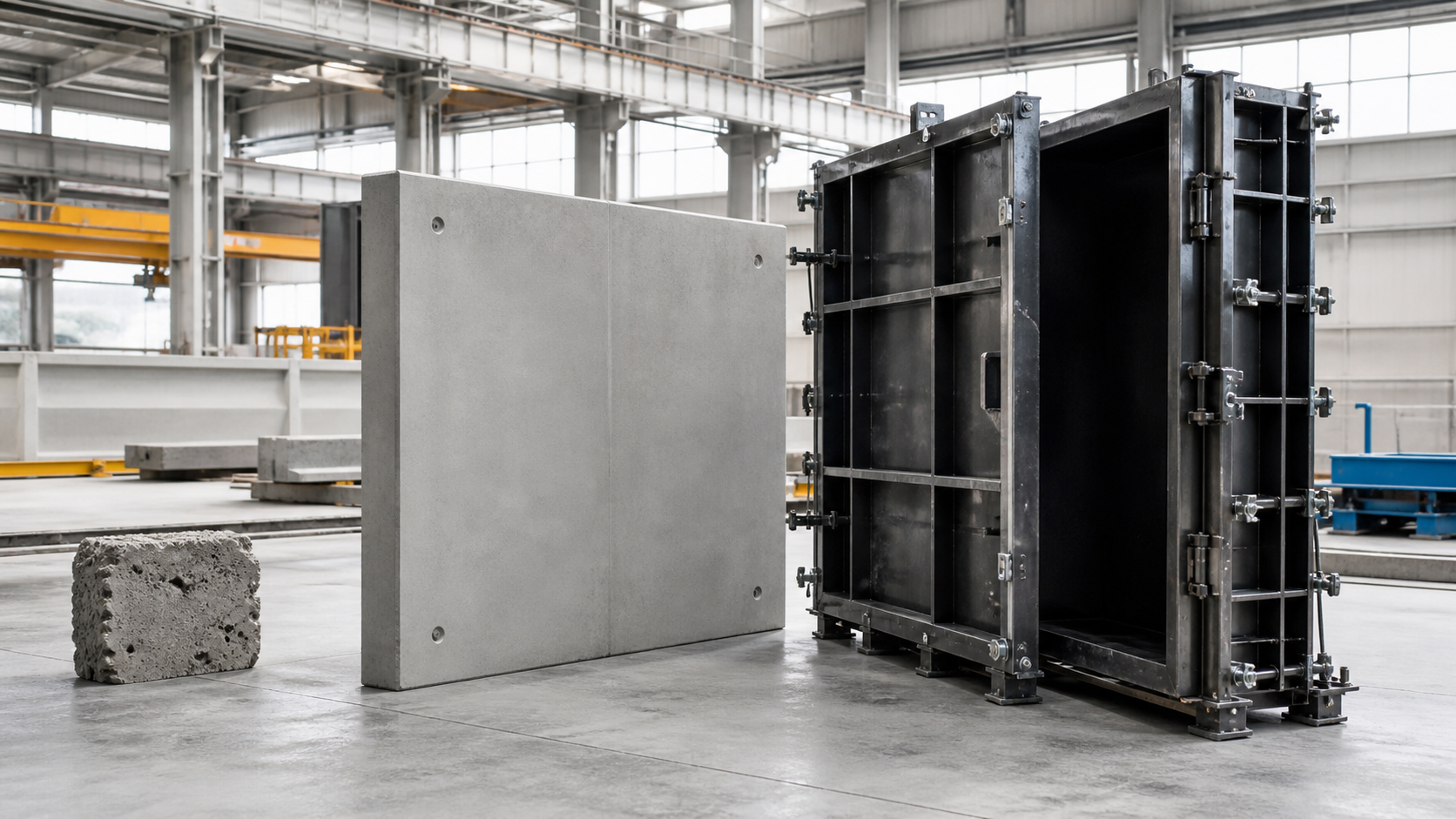
Common Precast Concrete Casting Defects and How Better Moulds Help Prevent Them
Common Precast Concrete Casting Defects and How Better Moulds Help Prevent Them
Precast concrete products must be strong, dimensionally accurate and visually clean to perform well at a construction site. Whether you manufacture boundary wall panels, U drains, box culverts, poles, cable trenches, retaining wall panels or other precast products, casting quality has a direct impact on customer trust and project performance.
Defects such as honeycombing, rough surfaces, cracks, uneven edges and dimensional variation can increase rejection, repair work and production cost. Many people focus only on concrete mix design, but the mould also plays an important role in preventing defects.
A heavy-duty, well-designed iron precast mould provides stable support during casting, vibration, demoulding and repeated production cycles. This article explains common precast concrete casting defects, why they occur and how better moulds help prevent them.
What Are Precast Concrete Casting Defects?
Casting defects are unwanted surface, shape or strength-related problems visible in a precast concrete product after demoulding. Some defects are only cosmetic, while others can affect the product’s structural performance, installation quality and service life.
The best way to reduce defects is to control the complete production process:
Concrete mix quality Correct mould design Proper mould cleaning and oiling Accurate reinforcement placement Adequate vibration Correct curing Careful demoulding and handling
1. Honeycombing in Precast Concrete
Honeycombing is one of the most common defects in precast concrete. It appears as rough, porous areas with visible aggregate and empty spaces on the finished surface.
Main causes of honeycombing
Insufficient vibration during casting Very dry or poorly designed concrete mix Improper placement of concrete in the mould Congested reinforcement Leakage from mould joints Poor access for concrete flow in narrow mould sections
How better moulds help prevent honeycombing
A strong and properly fabricated iron mould stays rigid during vibration. This helps concrete flow evenly into corners and narrow sections. Tight-fitting mould joints reduce slurry leakage, while smooth internal surfaces help produce a dense and clean concrete finish.
For products such as U drains, poles, wall panels and box culverts, moulds should be designed with proper access for concrete pouring and vibration.
2. Surface Voids and Air Bubbles
Small holes, pinholes or air bubbles on the concrete surface are common when trapped air cannot escape during casting.
Main causes of surface voids
Insufficient or uneven vibration Poor mould release oil application Dirty mould surface Improper concrete consistency Air trapped in corners or detailed mould sections
How better moulds help prevent surface voids
A smooth inner mould surface allows concrete to settle evenly. Properly designed mould corners and joints reduce air pockets. A clean iron mould with an even layer of quality release agent also helps the finished product separate easily without surface damage.
Regular mould cleaning before every casting cycle is essential for a uniform finish.
3. Cracks After Demoulding
Cracks can appear immediately after demoulding or during handling and curing. They may occur on edges, corners, thin sections or near lifting points.
Main causes of cracks
Early demoulding before concrete reaches enough strength Improper curing Weak or unstable mould support Incorrect reinforcement placement Rough handling during lifting or shifting Uneven concrete thickness
How better moulds help prevent cracks
A rigid iron mould maintains the correct product shape and thickness during casting. It supports fresh concrete properly until sufficient strength is achieved. Well-designed moulds can also include suitable lifting arrangements, edge support and reinforcement guides.
Proper demoulding timing remains important. Even the best mould cannot compensate for removing a product before it has gained adequate strength.
4. Uneven Edges and Broken Corners
Broken edges and chipped corners are common in precast panels, poles, door frames, covers and drainage products. These defects make the product look poor and may create fitting problems during installation.
Main causes of uneven edges
Worn-out mould edges Loose mould connections Improper release oil Early or rough demoulding Poor mould alignment Impact during product handling
How better moulds help prevent edge damage
Precision-fabricated iron moulds provide straight edges and accurate corners. Strong locking systems keep the mould parts aligned during casting. Smooth demoulding mechanisms and correctly applied release oil reduce the chance of concrete sticking to mould surfaces.
For repeated production, durable mould edges are especially important because they maintain quality across many casting cycles.
5. Dimensional Variation and Poor Alignment
Precast products must fit correctly at the project site. If wall panels, U drains, poles, box culvert sections or door frames have dimensional variation, installation becomes difficult and costly.
Main causes of dimensional variation
Weak or bent mould structure Loose bolts and locking systems Improper mould assembly Worn-out mould parts No checking of dimensions between production cycles Deformation during vibration
How better moulds help prevent dimensional variation
High-quality iron moulds are built to maintain shape under the weight of fresh concrete and vibration. Proper stiffeners, strong side plates and secure locking systems help preserve accurate dimensions.
Custom precast moulds should be manufactured according to approved drawings and required product sizes. Regular checking of mould dimensions also helps maintain consistent output.
6. Leakage Marks and Cement Slurry Loss
When mould joints are not properly sealed, cement slurry can leak during casting. This can create rough joint lines, weak edges and poor surface appearance.
Main causes of leakage
Loose bolts or clamps Damaged mould joints Poor mould assembly Warped side plates Lack of proper sealing where required
How better moulds help prevent leakage
A well-engineered iron mould has accurately fabricated joints and strong locking points. Tight assembly reduces the possibility of slurry leakage. Routine inspection of bolts, clamps, side plates and joints helps maintain casting quality.
Before every production cycle, operators should check that all mould connections are secure.
7. Rough or Stained Concrete Surface
A rough, stained or uneven surface reduces the visual quality of the precast product. This issue is especially important for architectural wall panels, compound wall panels, garden furniture and visible infrastructure components.
Main causes of rough surfaces
Rust, old concrete or dirt inside the mould Damaged mould surface Too much or too little release oil Poor concrete finishing Uneven vibration
How better moulds help prevent rough surfaces
Smooth, properly maintained iron mould surfaces create a clean concrete finish. Moulds should be cleaned after demoulding and lightly coated with an appropriate release agent before the next pour.
If mould surfaces are damaged or heavily corroded, they should be repaired or refurbished before they affect more production cycles.
8. Reinforcement Misalignment
Incorrect reinforcement position can reduce concrete cover and affect product strength. It can also cause exposed steel, cracking or poor load performance.
Main causes of reinforcement misalignment
No reinforcement guides in the mould Improper spacer blocks Movement during concrete pouring Weak mould support Incorrect fabrication of reinforcement cages
How better moulds help prevent reinforcement misalignment
Custom moulds can include reinforcement locating points, spacer support arrangements and guide systems. These features help keep reinforcement in the correct position during casting.
For structural precast products, reinforcement placement should always follow approved drawings and engineering requirements.
9. Product Sticking to the Mould
When a precast product sticks to the mould, it can damage the surface, corners or edges during demoulding. It also slows down the complete production cycle.
Main causes of sticking
No release oil or incorrect release oil Dirty mould surface Damaged inner mould finish Early demoulding Incorrect mould opening sequence
How better moulds help prevent sticking
Smooth internal surfaces, proper mould design and reliable opening mechanisms make demoulding easier. A clean mould and correctly applied release agent help the product release without damage.
Operators should avoid using excessive force during demoulding because it can damage both the product and mould.
Why High-Quality Iron Precast Moulds Matter
A durable iron precast mould is not only a tool for shaping concrete. It is an important investment for improving product consistency, reducing rejection and increasing production efficiency.
Benefits of a well-designed precast mould include:
Accurate product dimensions Smooth and consistent concrete finish Reduced leakage during casting Better support during vibration Long production life Faster mould assembly and demoulding Reduced product damage Lower repair and rejection cost Custom sizes for project requirements Reliable performance for repeated casting cycles
Precast Mould Maintenance Checklist
To maintain casting quality, mould maintenance should be part of daily production work.
Clean the mould after every demoulding cycle. Remove concrete residue from corners, joints and locking areas. Apply release oil evenly before the next casting cycle. Check bolts, clamps, hinges and locking systems. Inspect mould surfaces for rust, dents or damage. Verify dimensions regularly for critical precast products. Repair damaged parts before they affect production quality. Store moulds in a dry and organized area when not in use.
Choose the Right Mould Partner for Better Precast Quality
Better precast quality starts with a strong mould, but it also requires a disciplined production process. A mould should be selected based on product type, required dimensions, casting frequency, handling method and site requirements.
Paras Steel Industries manufactures heavy-duty iron precast concrete moulds for boundary walls, wall panels, U drains, box culverts, cable trenches, poles, retaining walls, manhole covers, door frames and other customized precast applications.
Our moulds are designed for strength, accurate dimensions and long production life. Custom sizes and designs can be manufactured according to your approved drawing and project requirement.
Contact Paras Steel Industries for a quotation for precast concrete moulds and machinery for your production unit or infrastructure project.