
Precast Mould Guide
Iron vs Aluminium Precast Mould: Which Material Is Right for Your Project?
Choosing the right mould material affects precast production quality, speed and long-term operating cost. This guide compares heavy-duty iron and aluminium precast moulds to help you select the right option.
By Paras Steel Industries ·
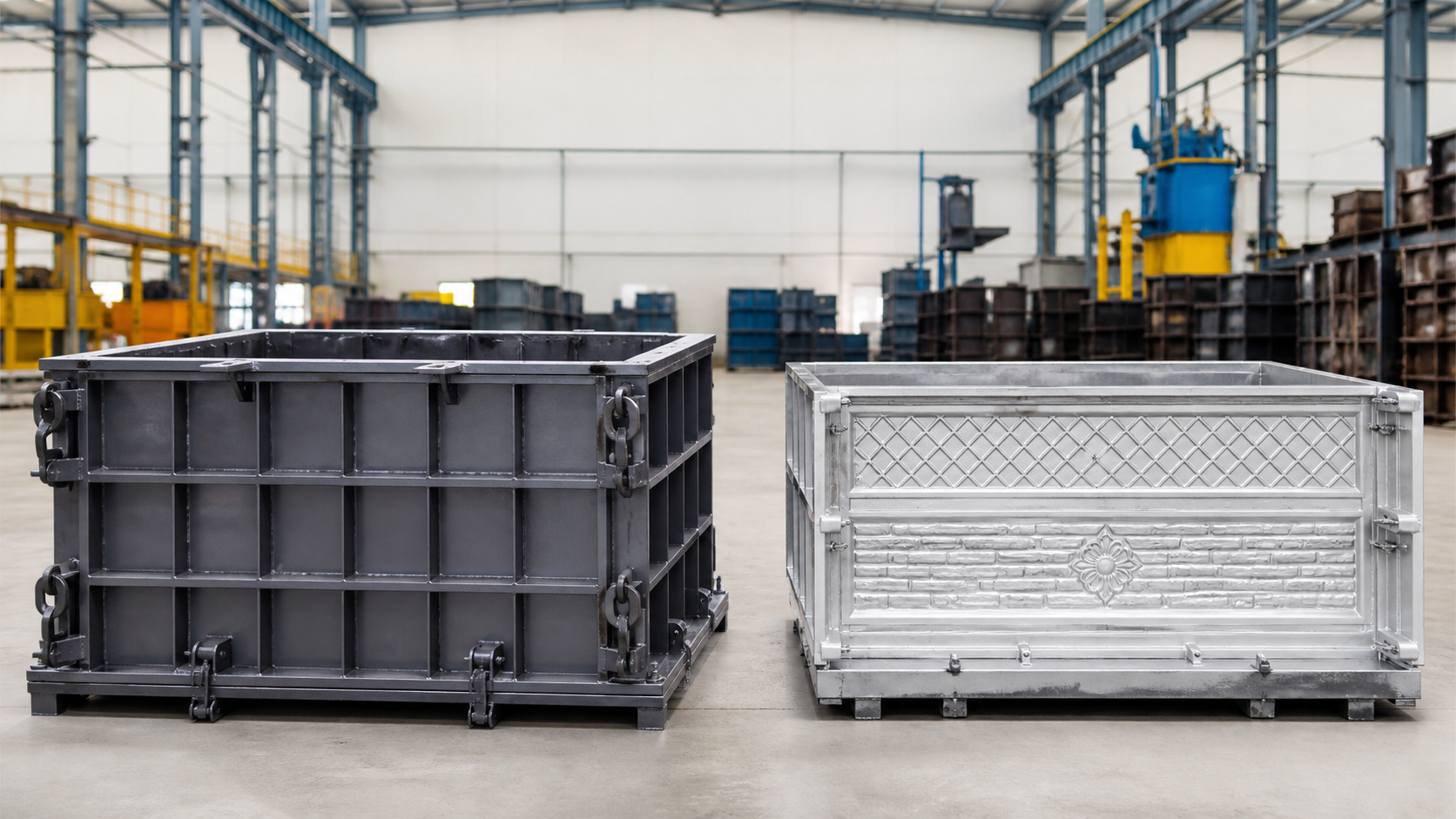
Iron vs Aluminium Precast Mould: Which Material Is Right for Your Project?
Iron vs Aluminium Precast Mould: Which Material Is Right for Your Project?
The mould is one of the most important investments in any precast concrete production unit. It controls the shape, dimensions, surface finish and repeatability of the final concrete product. Whether you manufacture boundary wall panels, U drains, box culverts, poles, wall panels or decorative products, choosing the right mould material matters.
Two common options are heavy-duty iron moulds and aluminium moulds. Both can be useful, but they are suitable for different applications. The right choice depends on product design, production volume, handling method, required finish and budget.
This guide explains the differences between iron and aluminium precast moulds so that you can make a practical decision for your project.
What Is an Iron Precast Mould?
An iron precast mould is a heavy-duty fabricated mould designed for repeated concrete casting. It is commonly used for structural and large precast products where strength, rigidity and long service life are important.
Iron moulds are widely used for U drain moulds, box culvert moulds, cable trench moulds, retaining wall moulds, highway barrier moulds, pole moulds, footing moulds and large wall panel moulds.
Because iron moulds are strong and stable, they can handle concrete pressure and vibration during repeated production cycles.
What Is an Aluminium Precast Mould?
An aluminium precast mould is lighter than an iron mould and is useful where easy handling, detailed patterns and corrosion resistance are important. Aluminium moulds are often chosen for decorative precast items and boundary wall designs where a clean pattern and smooth surface finish are required.
For example, aluminium design boundary wall moulds can be suitable for decorative wall panels with embossed patterns or customized finishes.
Iron Mould vs Aluminium Mould: Main Differences
1. Strength and Rigidity
Iron moulds are generally better for heavy-duty precast production. Their rigid structure helps maintain accurate dimensions during concrete placement and vibration.
Aluminium moulds are lighter and suitable for products that do not require extremely heavy structural mould construction. They should be designed properly to avoid deformation during repeated casting.
For large products such as box culverts, highway barriers and retaining wall panels, heavy-duty iron moulds are usually the preferred choice.
2. Weight and Handling
Aluminium moulds are lightweight compared to iron moulds. This makes them easier to handle, move and assemble, especially for smaller or decorative precast products.
Iron moulds are heavier and may require lifting equipment, trolleys or cranes for safe movement. However, their weight also contributes to stability during casting.
If your production unit has proper material-handling equipment, iron moulds can be a dependable long-term solution. If lightweight handling is the priority, aluminium moulds may be more convenient.
3. Surface Finish
Both iron and aluminium moulds can produce a smooth concrete finish when they are manufactured accurately, cleaned properly and used with the correct release agent.
Aluminium moulds are useful for decorative panels, embossed designs and products where pattern definition is important.
Iron moulds are ideal for structural precast products that require consistent dimensions, strength and repeatable production.
4. Durability and Production Life
Heavy-duty iron moulds are designed for long production life when maintained correctly. Regular cleaning, proper storage, weld inspection and timely repairs help preserve mould performance.
Aluminium moulds are corrosion-resistant and easier to handle, but they should be protected from rough handling, impact and deformation.
The actual life of any mould depends on design quality, thickness, fabrication, concrete pressure, vibration level, demoulding method and maintenance routine.
5. Customization Options
Both materials can be customized according to product size and design.
Iron moulds are commonly customized for U drains, box culverts, wall panels, poles, cable trenches, barriers and footings.
Aluminium moulds are commonly customized for decorative boundary wall panels, embossed designs and lighter precast elements.
Before ordering a custom mould, share your required dimensions, drawing, production capacity and concrete product details with the manufacturer.
Which Mould Material Is Best for Your Product?
Choose heavy-duty iron moulds when you need:
Large precast products High production volume Strong and rigid mould construction Structural components Repeated casting performance U drains, box culverts, barriers, cable trenches, poles and wall panels
Choose aluminium moulds when you need:
Lighter mould handling Decorative or embossed patterns Custom boundary wall designs Smooth detailed surface finish Corrosion-resistant material Lower-weight moulds for specific applications
Important Factors Before Buying a Precast Mould
Do not choose a mould only by material or price. Consider these points before placing an order:
Product dimensions and drawing Expected production quantity Concrete pressure and vibration requirement Required surface finish Available lifting and handling equipment Custom design requirement Easy demoulding arrangement Maintenance support Delivery timeline
A correctly designed mould can help reduce production delays, improve concrete finish and maintain consistent product dimensions.
Why Work with a Custom Precast Mould Manufacturer?
Every precast unit has different production requirements. Standard mould sizes may not always match your drawing, site requirement or target production capacity.
A custom precast mould manufacturer can help you select the suitable material, mould design, dimensions and accessories for your product. This is especially important for large infrastructure products, drainage systems, boundary wall panels and specialized concrete components.
Paras Steel Industries manufactures precast concrete moulds and machinery for projects across India. Heavy-duty iron moulds are available for structural and repeated casting applications, while aluminium options can be used for selected decorative boundary wall designs.
Conclusion
Iron and aluminium precast moulds both have useful applications. Iron moulds are a strong choice for large, structural and high-production precast components. Aluminium moulds are useful for lightweight handling and decorative precast designs.
The best mould material is the one that matches your product, production requirement and handling capability. Before purchasing, discuss your drawing, size, quantity and desired finish with an experienced precast mould manufacturer.
For custom precast mould solutions, contact Paras Steel Industries in Gondal, Gujarat for product guidance and Pan-India delivery.