
Precast Production Guide
How to Improve Precast Production Speed Without Compromising Quality
Fast production is important for every precast concrete unit, but speed should never lead to poor finish, dimensional errors or product rejection. The right moulds, machinery and process planning help increase output while maintaining reliable quality.
By Paras Steel Industries ·
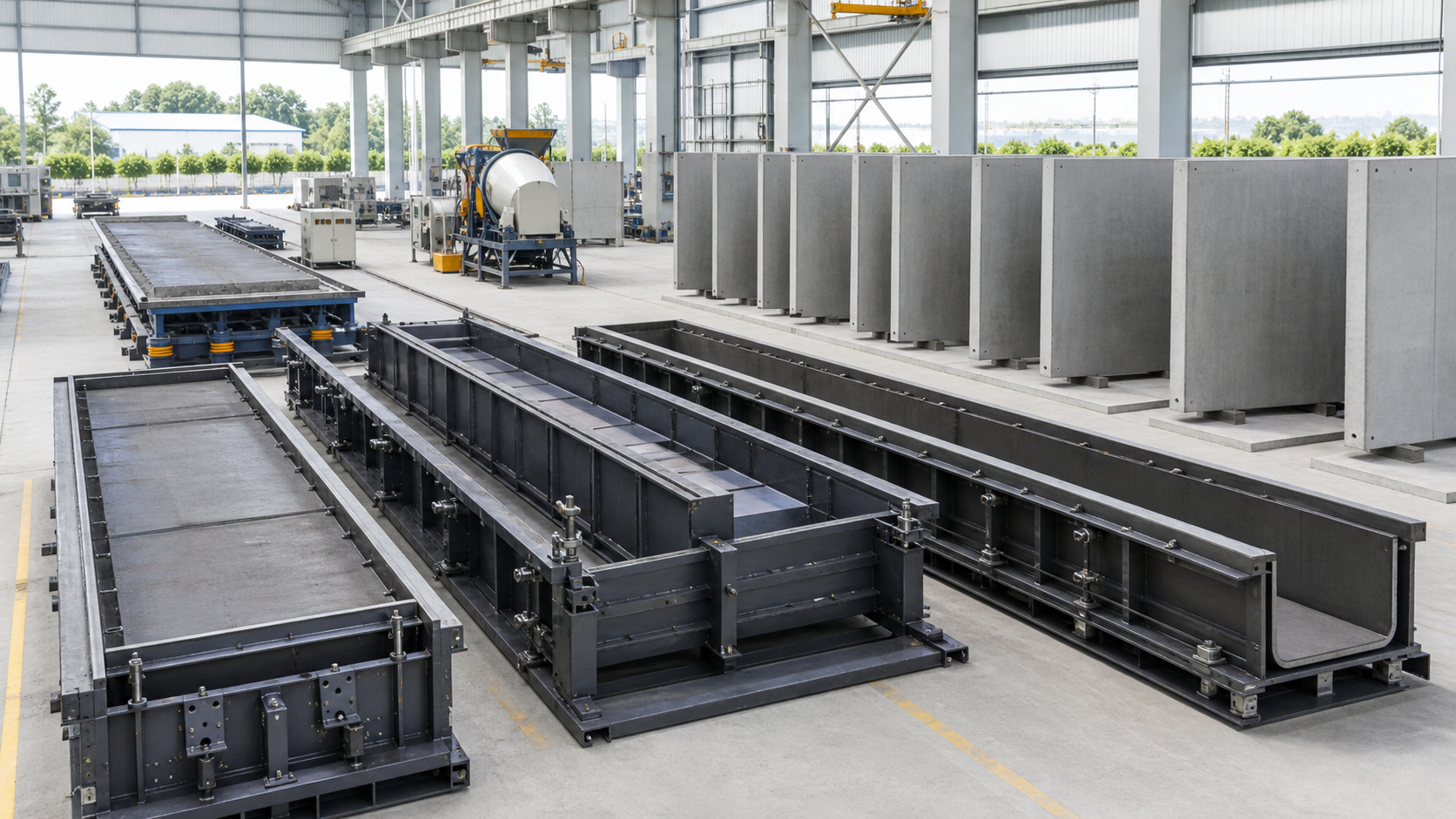
How to Improve Precast Production Speed Without Compromising Quality
How to Improve Precast Production Speed Without Compromising Quality
Precast concrete manufacturing is all about consistency. A production unit must deliver the required quantity on time while ensuring every product meets the expected size, strength and finish.
Increasing speed without proper planning can create problems such as honeycombing, broken edges, cracks, poor alignment, rough surfaces and high product rejection. On the other hand, a well-organized production process can improve output without reducing quality.
Whether you manufacture compound wall panels, poles, U drains, box culverts, cable trenches, retaining wall panels, door frames or other precast products, the goal should be faster and more controlled production.
This article explains practical ways to improve precast production speed while protecting concrete quality.
1. Use Heavy-Duty and Easy-to-Operate Iron Moulds
The mould is one of the most important parts of any precast production process. Weak, damaged or poorly designed moulds slow down casting and increase the chance of defects.
Heavy-duty iron moulds help maintain accurate dimensions during concrete pouring and vibration. Moulds with strong locking systems, proper stiffeners and smooth opening arrangements reduce assembly time and make demoulding easier.
A good mould should provide:
Fast assembly and opening Secure locking points Stable support during vibration Accurate dimensions Smooth internal surfaces Easy cleaning access Long production life
When moulds are designed for repeated production cycles, workers can cast more units with less adjustment and rework.
2. Standardize Your Production Process
Every product type should have a clear and repeatable production method. Workers should know the correct sequence for mould preparation, reinforcement placement, concrete pouring, vibration, finishing, curing and demoulding.
Create a simple standard operating process for each product.
For example:
Clean the mould Apply release oil evenly Assemble and lock the mould Place reinforcement and inserts Check dimensions and alignment Prepare the correct concrete mix Pour concrete in controlled layers Use vibration properly Finish the top surface Move the product for curing Demould only after adequate strength is achieved
A standard process reduces confusion, prevents mistakes and helps new workers learn faster.
3. Keep Moulds Clean and Ready Before the Next Casting Cycle
Production slows down when workers spend too much time removing old concrete from moulds or searching for bolts, clamps and tools.
After every demoulding cycle, clean the mould immediately. Remove concrete residue from corners, joints, hinges and locking areas. Apply release oil at the correct time and keep mould accessories organized.
A clean and prepared mould helps the next casting cycle start faster and also improves the concrete surface finish.
4. Use a Concrete Vibrator Table Correctly
Proper vibration helps concrete settle inside the mould, removes trapped air and improves surface finish. A vibrator table can reduce honeycombing, voids and weak corners when used correctly.
However, excessive vibration can cause segregation, where heavier aggregate settles and cement slurry rises. The vibration time should be controlled according to the product type, concrete mix and mould size.
A stable vibrator table with proper mould support helps improve quality and speed at the same time.
5. Plan Concrete Mixing and Material Supply
Workers should not wait for concrete, aggregate, cement, reinforcement or mould accessories during production hours. Material delays create idle time and reduce daily output.
Plan the required material quantity before starting the shift. Keep cement, sand, aggregate, water, reinforcement cages, release oil and tools ready near the casting area.
A concrete mixer machine should be selected according to the required batch size and daily production quantity. Consistent mixing time and water control help maintain concrete quality across batches.
6. Use Multiple Mould Sets for High-Demand Products
If one product has high demand, relying on a single mould can limit output. Multiple mould sets allow the team to prepare one mould while another product is curing or being demoulded.
For example, a boundary wall unit may use multiple panel moulds and pole moulds to increase daily production. A drainage product manufacturer can use multiple U drain or box culvert moulds for continuous casting.
Adding mould sets is often more practical than rushing the curing or demoulding process.
7. Improve Reinforcement Preparation
Reinforcement work can become a production bottleneck if cages are prepared only after mould assembly begins. Prepare reinforcement cages, spacers and inserts in advance.
Create a dedicated reinforcement preparation area where workers can cut, bend and tie steel according to each product size. Label or stack prepared cages product-wise.
When reinforcement is ready before casting, mould loading becomes faster and more accurate.
8. Use Proper Curing Instead of Early Demoulding
Early demoulding may appear to increase production speed, but it often causes cracks, broken corners and damaged surfaces. This leads to repair work, rejection and customer complaints.
Use a controlled curing process appropriate for the concrete mix and local conditions. Maintain moisture and protect fresh products from excessive heat, rapid drying or impact.
Production speed should be improved through better mould planning and workflow, not by removing products before they gain sufficient strength.
9. Organize the Factory Layout
A poorly planned factory layout increases unnecessary movement. Workers may spend time carrying tools, concrete, reinforcement and finished products over long distances.
Arrange the production area in a logical flow:
Raw material storage Concrete mixer area Reinforcement preparation area Mould preparation area Casting and vibration area Curing area Demoulding area Finished product storage Loading area
A smooth production flow reduces handling time, improves safety and increases output.
10. Train Workers for Quality Checks
Quality control should not happen only after the product is completed. Workers should check quality at each stage.
Before casting, check mould locking, oiling, reinforcement position and dimensions. During casting, check concrete consistency and vibration. After demoulding, inspect edges, surface finish and size.
Training workers to identify small issues early prevents larger problems later.
11. Reduce Product Rejection Through Preventive Maintenance
Damaged moulds, loose clamps, worn hinges and rusted surfaces can cause leakage, dimensional variation and surface defects. These problems reduce production speed because products need repair or recasting.
Inspect moulds regularly and repair small issues before they become major failures. Maintain vibrator tables, concrete mixers, trolleys and lifting equipment according to a planned schedule.
Preventive maintenance saves time, improves equipment life and helps maintain stable production.
12. Track Daily Production Data
Simple daily records can help identify where time is being lost. Track the number of units cast, moulds used, rejected products, repair work, material consumption and delays.
For example, if U drain production is slow, check whether the delay is caused by mould cleaning, reinforcement preparation, concrete supply, curing space or demoulding.
Data helps the business owner make better decisions about manpower, mould quantity and machinery investment.
Quality and Speed Must Work Together
The best precast manufacturers do not choose between speed and quality. They improve both through proper planning, strong moulds, reliable machinery and disciplined production methods.
The key is to reduce unnecessary waiting, repeated work, leakage, product damage and casting defects. When the entire process is organized, faster output becomes possible without compromising concrete quality.
Why Choose the Right Precast Mould and Machinery Partner?
High-quality production depends on reliable equipment. Heavy-duty iron moulds, stable vibrator tables, concrete mixer machines and material shifting trolleys help create a more efficient precast production line.
Paras Steel Industries manufactures iron precast concrete moulds and machinery for precast production units across India. Our range includes compound wall moulds, wall panel moulds, pole moulds, U drain moulds, box culvert moulds, cable trench moulds, retaining wall moulds, vibrator tables, concrete mixer machines and shifting trolleys.
We also provide custom mould sizes and designs according to approved project drawings and production requirements.
Contact Paras Steel Industries for a quotation for precast concrete moulds and machinery that can help improve your production efficiency and product quality.