
Precast Mould Guide
How to Choose Precast Concrete Moulds for Durable, High-Quality Concrete Products
Choosing the right precast concrete mould improves product quality, production speed and long-term manufacturing efficiency. Here is what every buyer should check.
By Paras Steel Industries ·
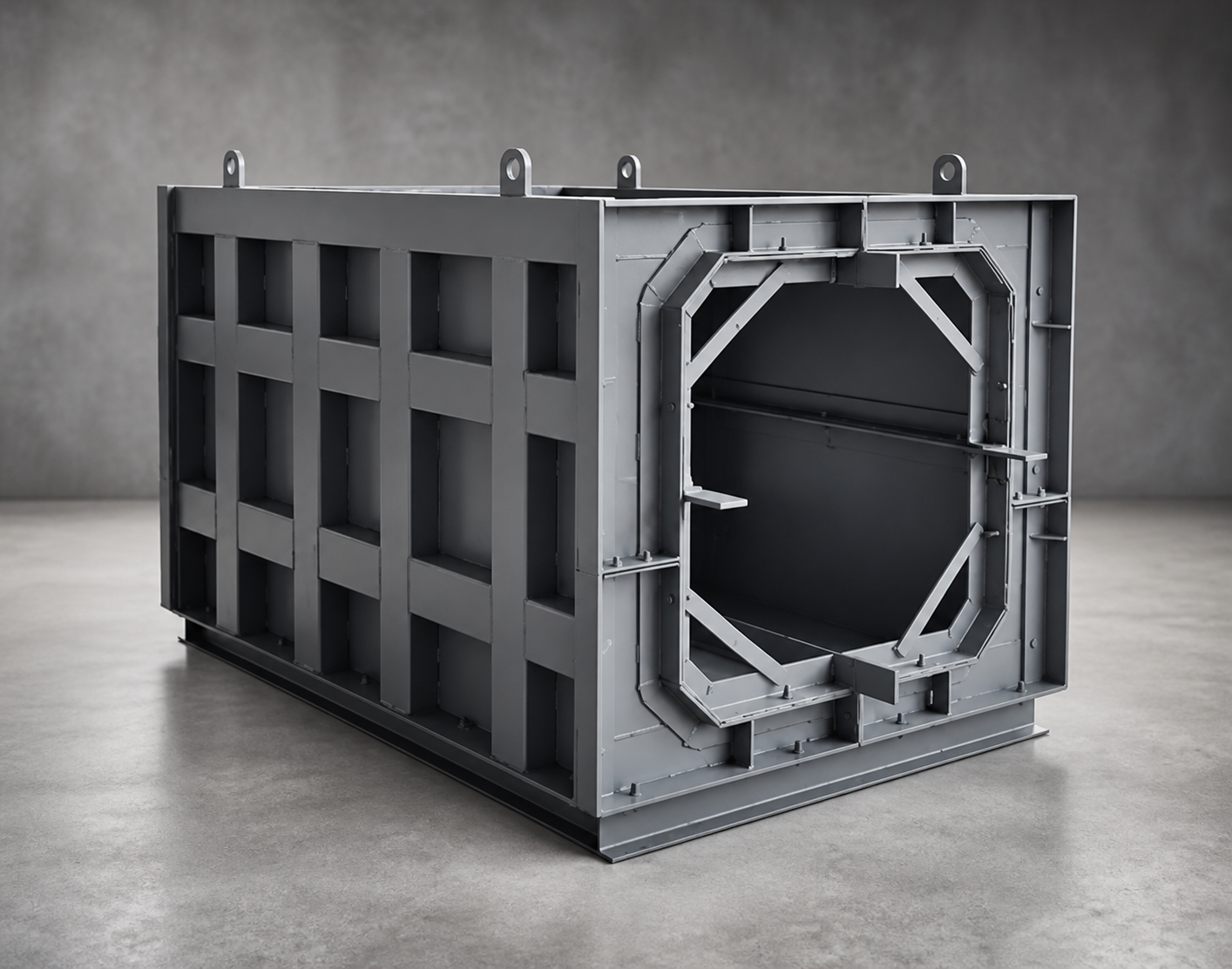
How to Choose Precast Concrete Moulds for Durable, High-Quality Concrete Products
Precast concrete moulds are the foundation of consistent, high-quality concrete products. Whether you manufacture compound wall panels, box culverts, boundary walls, poles, drain channels or custom precast elements, the quality of the mould directly affects the finish, strength, dimensions and speed of your production.
A well-designed steel mould helps manufacturers produce the same concrete component repeatedly with accuracy. It also reduces wastage, makes demoulding easier and improves the overall appearance of the finished product. For precast manufacturers, contractors and infrastructure businesses, selecting the right mould is an important investment decision.
What are precast concrete moulds?
Precast concrete moulds are specially fabricated forms into which concrete is poured, compacted and cured to create a required shape. These moulds can be made for standard products such as wall panels, fencing poles, box culverts and U-drains, or designed for custom project requirements.
Steel precast moulds are widely preferred because they are strong, reusable and suitable for repeated production cycles. They maintain shape better than temporary formwork and can be manufactured with precise dimensions for reliable results.
Why mould quality matters in precast production
The mould surface and structure determine the final quality of a precast product. A poor-quality mould can cause uneven edges, leakage of cement slurry, inaccurate dimensions and difficult demoulding. These issues increase rework, material wastage and labour costs.
A durable mould provides smooth surface finishing, correct dimensions and repeatable output. It also supports faster production because workers can assemble, pour and demould concrete with less difficulty. For businesses producing large quantities of precast products, this consistency is essential.
Key factors to consider before buying precast concrete moulds
First, choose a mould that matches the exact size and design of your required concrete product. Small dimensional errors can create installation problems at the construction site. Always confirm length, width, thickness, reinforcement clearance and connection details before fabrication begins.
Second, check the material quality. Heavy-duty steel plates, properly designed stiffeners and strong welding help the mould withstand vibration, concrete pressure and regular handling. A robust frame prevents bending or distortion during repeated use.
Third, consider the ease of demoulding. Good mould design includes practical opening mechanisms, removable side plates or hinged systems where required. Easy demoulding reduces the chance of damaging the fresh concrete product and saves valuable production time.
Fourth, ask about surface finish and anti-rust protection. Smooth internal surfaces improve the finish of the concrete and make cleaning easier after every casting cycle. Protective paint or coating also helps increase mould life in demanding factory conditions.
Common applications of steel precast moulds
Precast concrete moulds are used across residential, commercial and infrastructure projects. Compound wall moulds and boundary wall moulds are popular for fast site fencing. Precast wall panel moulds help create uniform panels for industrial and housing projects.
Box culvert moulds are used for drainage, road and infrastructure works. U-drain and cable trench moulds support water management and utility projects. Pole moulds, footing moulds, door frame moulds and custom concrete product moulds are also used by precast manufacturers throughout India.
Benefits of choosing custom-made moulds
Standard moulds are useful for regular products, but custom steel moulds offer better control when a project has unique dimensions or designs. A custom mould can be developed according to the client’s drawing, production process and required output.
Custom mould fabrication helps reduce modifications at the production stage. It also ensures that every finished precast component fits properly during installation. For large projects, accurate custom moulds can improve productivity and reduce overall project delays.
How to maintain precast concrete moulds
Regular cleaning is important after every use. Remove concrete residue before it hardens and apply an appropriate mould release agent before the next casting cycle. This improves demoulding and protects the inner surface.
Inspect bolts, hinges, weld joints and locking systems regularly. If a mould is stored for a long time, keep it in a dry area and protect it from moisture. Proper maintenance extends the life of steel precast moulds and keeps production quality consistent.
Choose the right precast mould manufacturer
A reliable precast mould manufacturer should understand both fabrication and concrete production requirements. Look for a company that can provide accurate design support, quality steel fabrication, durable welding, timely delivery and custom mould solutions.
Paras Steel Industries manufactures steel moulds and equipment for a wide range of precast concrete applications. From wall panel moulds and box culvert moulds to custom infrastructure moulds, the right fabrication partner can help your business achieve faster production, reliable quality and long-term value.
For a mould requirement based on your product size or drawing, contact Paras Steel Industries to discuss a suitable precast concrete mould solution.