
Precast Infrastructure Moulds
Box Culvert Mould Manufacturer in India: Complete Precast Production Guide
Box culvert moulds help precast manufacturers produce strong, dimensionally accurate concrete culverts for drainage, road and infrastructure projects.
By Paras Steel Industries ·
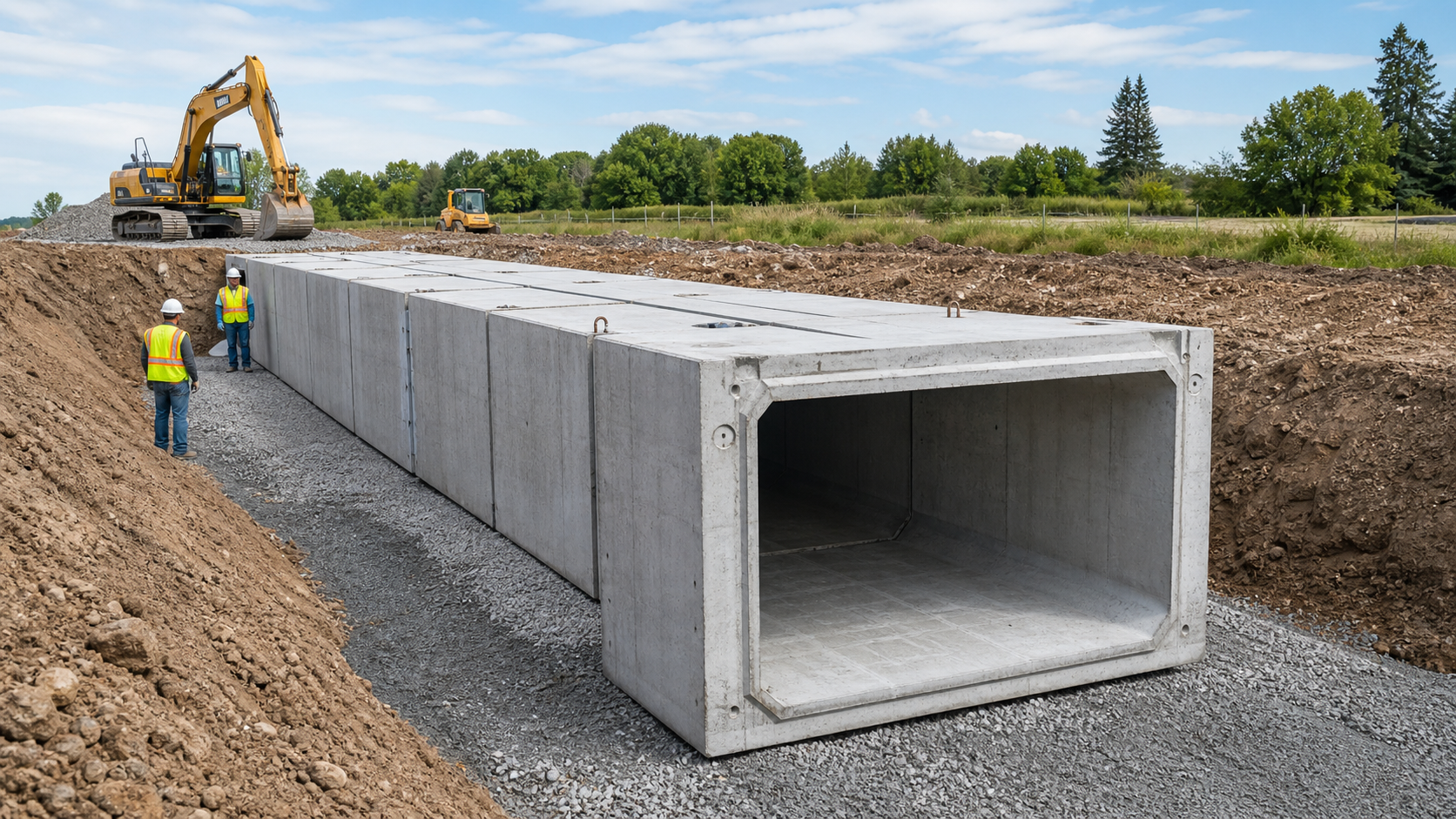
Box Culvert Mould Manufacturer in India: Complete Precast Production Guide
Box culverts are widely used in road construction, drainage systems, railway crossings, industrial developments and infrastructure projects. They provide a strong, enclosed passage for stormwater, irrigation water, utility lines and small vehicle crossings.
For precast concrete manufacturers, the quality of the box culvert mould directly affects the final product. A durable steel box culvert mould helps produce concrete units with accurate dimensions, smooth surfaces and consistent strength. It also supports faster production and reduces the need for repeated site casting.
What is a box culvert mould?
A box culvert mould is a heavy-duty steel form used to manufacture precast concrete box culvert units. Concrete is poured into the mould, compacted and cured to create a hollow rectangular or square concrete structure.
The mould is designed according to the required internal opening, wall thickness, length, height and reinforcement clearance. It can be made for standard box culvert sizes or customised according to project drawings.
After the concrete reaches the required strength, the mould is opened and the finished culvert unit is removed. The same mould can then be cleaned, prepared with release agent and used again for the next production cycle.
Why precast box culverts are preferred
Precast box culverts allow construction teams to install drainage structures faster than conventional cast-in-situ methods. Since the units are manufactured in a controlled factory environment, concrete quality, compaction and dimensions can be monitored more effectively.
Precast production reduces on-site work, labour dependency and weather-related delays. It also helps contractors maintain a more organised construction schedule, especially for roads, highways, industrial sites and large infrastructure developments.
The finished box culvert units can be transported to the site and installed with appropriate lifting equipment. This makes precast culverts a practical solution for projects where speed, reliability and repeatable quality are important.
Importance of a high-quality box culvert mould
A box culvert mould must withstand the pressure of fresh concrete, vibration during compaction and regular demoulding. If the mould is weak or inaccurately fabricated, it can lead to uneven walls, leakage, distorted dimensions and poor concrete finishing.
High-quality steel plates, structural stiffeners and strong welding help the mould maintain its shape over repeated casting cycles. Accurate fabrication is important because even small dimensional variations can create difficulties during installation.
A well-designed mould also makes demoulding safer and easier. Proper locking systems, removable panels and practical opening arrangements reduce the risk of damaging the precast unit after casting.
Key features to check before buying a box culvert mould
The first consideration is the required culvert size. Confirm the internal width, internal height, length, wall thickness and slab thickness before the mould is fabricated. The mould should match the structural drawing and project requirement exactly.
The steel structure should be strong enough for the size of the culvert and the expected production cycle. Heavy-duty steel sections and correctly placed stiffeners help prevent bending or distortion during concrete pouring and vibration.
The mould should have reliable locking arrangements. Strong bolts, clamps, hinges and removable side panels make assembly and demoulding more efficient. Smooth internal surfaces are also important because they improve the finish of the concrete product and reduce cleaning time.
It is useful to discuss the expected daily or monthly production quantity with the mould manufacturer. A factory with a higher output requirement may need multiple mould sets or a modular mould system to maintain production speed.
Applications of precast concrete box culverts
Precast box culverts are commonly used for stormwater drainage beneath roads and highways. They are also installed in industrial areas, housing projects, railway crossings, agricultural land and commercial developments.
Depending on the design and load requirement, box culverts can be used for water channels, utility crossings, small bridges, underpasses and drainage structures. Their enclosed design provides strength and protects the flow path from external damage.
Custom box culvert moulds can also be manufactured for specialised infrastructure applications. This may include larger openings, different wall thicknesses, special joints, lifting arrangements or project-specific connection details.
Benefits of custom box culvert moulds
Every project does not require the same culvert size. A custom box culvert mould allows precast manufacturers to produce units according to the exact dimensions and design specifications required by the client.
Custom moulds can include tongue-and-groove joints, spigot-and-socket connections, lifting hooks, removable cores and reinforcement provisions. These details make installation easier and improve the fit between multiple precast units.
For large infrastructure projects, a custom-designed mould helps maintain consistent quality from the first unit to the last. This reduces site-level adjustments, improves installation speed and supports better overall project execution.
How to maintain box culvert moulds
Regular maintenance helps increase the life of a steel box culvert mould. Concrete residue should be removed after every casting cycle before it hardens. Applying a suitable mould release agent before casting helps make demoulding easier and protects the internal surface.
Bolts, hinges, clamps, locking systems and weld joints should be inspected regularly. If the mould is not in use, it should be stored in a dry location and protected from moisture to reduce rusting.
Timely cleaning and maintenance reduce repair costs, improve production quality and keep the mould ready for repeated use.
Choose the right box culvert mould manufacturer in India
A reliable box culvert mould manufacturer should understand both steel fabrication and precast concrete production. The manufacturer should be able to provide accurate dimensions, durable steel construction, strong welding and custom design support.
Paras Steel Industries manufactures steel moulds for precast concrete and infrastructure applications. From box culvert moulds and U-drain moulds to wall panel moulds, vertical box moulds and custom precast solutions, the right mould design can help improve production speed, quality and long-term value.
If you need a box culvert mould based on your required size, drawing or production capacity, contact Paras Steel Industries for a suitable precast concrete mould solution.